TLIF Treatment for Chronic Lower Back Pain
TLIF Surgery (Transforaminal Lumbar Interbody Fusion)
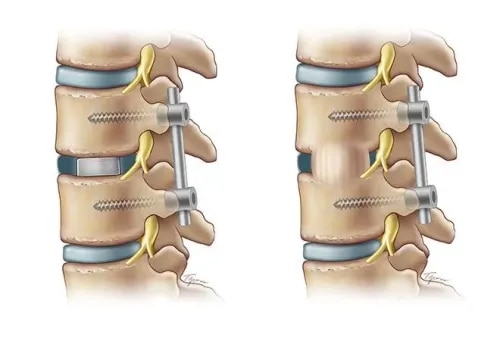
Transforaminal Lumbar Interbody Fusion, commonly known as TLIF, is an advanced spinal fusion procedure used to treat chronic lower back pain caused by conditions such as disc degeneration, spinal instability, or spondylolisthesis. The surgery involves removing a damaged spinal disc and fusing two vertebrae together using a bone graft and specialized implants to restore long-term spinal stability.
This minimally invasive technique is highly effective in relieving sciatica, nerve compression, and instability in the lumbar spine while promoting faster recovery and reduced tissue damage.
What is TLIF?
TLIF is a surgical technique in which the surgeon approaches the spine from the side of the lower back through a transforaminal route. During the procedure, the damaged disc is removed, compressed nerves are relieved, and a bone graft or interbody cage is placed into the disc space. Screws and rods are then used to stabilize the spine and support proper fusion between the vertebrae.
When is TLIF Recommended?
TLIF surgery is generally recommended when non-surgical treatments such as medications, physiotherapy, injections, or lifestyle modifications fail to provide lasting relief. It is commonly advised for patients suffering from:
Degenerative Disc Disease
Spondylolisthesis (slipped vertebra)
Recurrent Disc Herniation
Spinal Instability
Foraminal Stenosis
Failed Back Surgery Syndrome
Chronic Sciatica
How TLIF Surgery is Performed
1. Anesthesia
The procedure is performed under general anesthesia to ensure patient comfort throughout the surgery.
2. Small Incision
A small incision is made near the midline of the lower back.
3. Surgical Access
The surgeon gently retracts the surrounding muscles and accesses the spine through a transforaminal approach.
4. Disc Removal
The damaged or herniated disc is carefully removed to relieve pressure on the spinal nerves.
5. Bone Graft or Cage Placement
A spacer or cage filled with bone graft material is inserted between the vertebrae to maintain disc height and encourage fusion.
6. Stabilization
Specialized screws and rods are placed to stabilize the spinal segment and maintain proper alignment.
7. Fusion Process
Over time, the bone graft helps the adjacent vertebrae fuse into a single solid bone, providing long-term stability.
Benefits of TLIF Surgery
Minimally invasive procedure with smaller incisions
Effective decompression of spinal nerves
Improved spinal stability and alignment
Long-lasting relief from back and leg pain
Reduced blood loss and muscle damage
Shorter hospital stay and quicker recovery
Lower risk of postoperative instability compared to traditional approaches
Recovery After TLIF Surgery
Most patients are encouraged to walk within a day after surgery. Recovery time varies depending on the patient’s overall health and the complexity of the procedure. Light activities may resume within a few weeks, while complete spinal fusion can take several months. Physical therapy and proper rehabilitation play an important role in achieving the best outcomes.