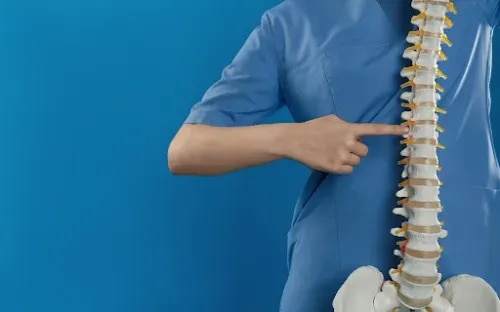
UBE Spine Surgery (Unilateral Biportal Endoscopy)
UBE Spine Surgery (Unilateral Biportal Endoscopy) for Minimally Invasive Spine Treatment
Unilateral Biportal Endoscopy, commonly known as UBE Spine Surgery, is an advanced minimally invasive procedure used to treat a wide range of spinal disorders, particularly conditions affecting the lumbar spine. This modern surgical technique is transforming spine care by offering precise nerve decompression, minimal tissue damage, and faster recovery compared to traditional open spine surgery.
Unlike conventional surgery, UBE uses two small portals — one for a high-definition endoscopic camera and the other for specialized surgical instruments. This dual-portal approach allows the surgeon to directly visualize the spinal structures and perform accurate treatment with minimal disruption to surrounding muscles and tissues.
What is UBE Spine Surgery?
UBE Spine Surgery is a minimally invasive endoscopic spine procedure that enables surgeons to treat spinal conditions through tiny incisions using real-time camera guidance. The technique provides excellent visualization of the spinal nerves, discs, and surrounding structures while preserving normal anatomy.
The primary goals of UBE surgery are to:
Relieve nerve compression
Remove herniated disc material
Decompress the spinal canal
Reduce pain and neurological symptoms
Preserve muscles and spinal stability
Promote faster recovery and rehabilitation
Conditions Treated with UBE Spine Surgery
UBE is highly effective in treating various spinal disorders, including:
Lumbar Disc Herniation
Lumbar Canal Stenosis
Foraminal Stenosis
Degenerative Disc Disease
Facet Joint Cysts
Sciatica
Ligamentum Flavum Hypertrophy
Recurrent Disc Herniation
Selected Spinal Infections
Mild Spinal Instability in selected patients
How UBE Spine Surgery is Performed
1. Anesthesia
The procedure is usually performed under general or spinal anesthesia.
2. Two Small Portals
Two tiny incisions are made near the affected spinal segment:
One portal is used for the endoscopic camera
The second portal is used for surgical instruments
3. Endoscopic Visualization
A high-definition camera provides a magnified and clear view of the spinal structures.
4. Decompression and Treatment
The surgeon removes herniated disc material, thickened ligaments, or bone causing nerve compression while preserving healthy tissues.
5. Closure
The small incisions are closed with minimal sutures or adhesive strips, resulting in very little scarring.
Key Benefits of UBE Spine Surgery
Minimally Invasive Technique
Small skin incisions
Minimal muscle and tissue damage
Faster Recovery
Early mobilization after surgery
Quicker return to daily activities
Less Blood Loss
Cleaner and safer surgical field
Reduced risk of complications
Reduced Post-Operative Pain
Less need for strong pain medications
Improved patient comfort
Better Cosmetic Results
Minimal scarring due to tiny incisions
High-Definition Visualization
Precise identification and treatment of nerve compression
Shorter Hospital Stay
Many patients can be discharged on the same day or within 24 hours
Suitable for Elderly Patients
Lower surgical stress and faster rehabilitation
Recovery After UBE Spine Surgery
Recovery following UBE surgery is generally rapid compared to traditional spine surgery. Most patients are able to walk within hours after the procedure and resume light activities within a few days. Physiotherapy and guided rehabilitation may help improve long-term outcomes and spinal strength.