A sudden back pain after a minor fall or lifting episode can indicate a weakened vertebra, but a collapsed vertebra is not automatically an indication for cement augmentation. You will learn how clinicians confirm the fracture, identify urgent warning signs, compare treatment options, and judge whether kyphoplasty is worth discussing in your case.
Key takeaways
- MRI with STIR sequences helps identify an active, recent compression fracture.
- Kyphoplasty suits selected painful fractures that persist despite initial non-surgical care.
- Ask about cement leakage, adjacent fractures, anaesthesia and hospital charges before consenting.
- Treat osteoporosis after the procedure to reduce the risk of another vertebral fracture.
How osteoporosis causes a vertebral compression fracture
Osteoporosis thins the vertebra’s internal, honeycomb-like bone until ordinary loading can buckle the vertebral body. An osteoporotic compression fracture often causes sudden mid-back or lower-back pain after lifting, coughing, bending, or a minor fall. Standing and walking intensify it; rest may not remove it.
Height loss and a progressively stooped posture can follow when several vertebrae collapse.
| Pattern or cause | Typical distinction |
|---|---|
| Traumatic fracture | Follows a significant impact, fall, or accident; the force may also injure the posterior spinal structures. |
| Metastatic or myeloma fracture | May cause constant or night pain, weight loss, or a cancer history; the bone can fail without an injury. |
| Infection-related collapse | Pain accompanies fever, chills, or feeling unwell and needs prompt medical assessment. |
| Wedge fracture | The front of the vertebral body loses height, producing a wedge shape; osteoporosis is one possible cause. |
| Crush fracture | Most of the vertebral body loses height, often causing more marked deformity. |
| Endplate fracture | The upper or lower surface of the vertebra breaks and may occur with broader compression. |
A radiograph can show height loss, but it cannot reliably prove that the fracture is recent or causing today’s pain. MRI can show active bone-marrow swelling and nerve involvement; CT clarifies posterior-wall damage.
Before considering kyphoplasty in Jaipur for osteoporosis fracture, seek urgent assessment for leg weakness, groin numbness, bladder or bowel loss, fever, or severe pain after major trauma.
Which tests show whether the fracture is recent and treatable?
An MRI is the key test for deciding whether a vertebral compression fracture is recent. Fluid-sensitive marrow sequences show oedema from an acute or still-active fracture; an old collapse usually lacks this signal.
For vertebral compression fracture treatment in Jaipur, doctors combine the images with your history and examination. They check whether pain is reproduced when the level is loaded, assess leg strength, sensation, reflexes and walking, and review cancer, infection, major-trauma and osteoporosis risks. A radiology report or the amount of collapse alone is not enough.
| Test | What it can establish | What it cannot establish |
|---|---|---|
| Standing or supine X-rays | Vertebral height loss, alignment and visible deformity | Whether the collapse is recent or caused by osteoporosis |
| MRI | Marrow oedema, fracture activity, cancer, infection and nerve compression | Whether cement treatment will relieve every source of pain |
| CT | Posterior-wall damage, retropulsion, spinal canal narrowing and fracture anatomy | Bone strength or fracture age by itself |
| DEXA scan | Low bone mineral density and osteoporosis risk | Whether today’s pain comes from this fracture |
A kyphoplasty discussion is more appropriate when:
- The fracture is recent, unhealed, confirmed on imaging and matches the pain.
- Pain remains severe and limits standing or walking despite appropriate pain relief and activity changes.
- CT and neurological findings show no safer alternative, while anticoagulants and other medical conditions have been reviewed.
- Atypical features prompt blood tests or further imaging for infection, cancer or another cause.
When kyphoplasty is appropriate—and when another treatment is safer
Kyphoplasty is appropriate for selected adults with a recent, unhealed fracture causing severe pain and restricted movement after optimal non-operative care has failed. MRI should confirm an active fracture; vertebral height loss on an X-ray alone is not enough.
| Option | What it means | When it applies |
|---|---|---|
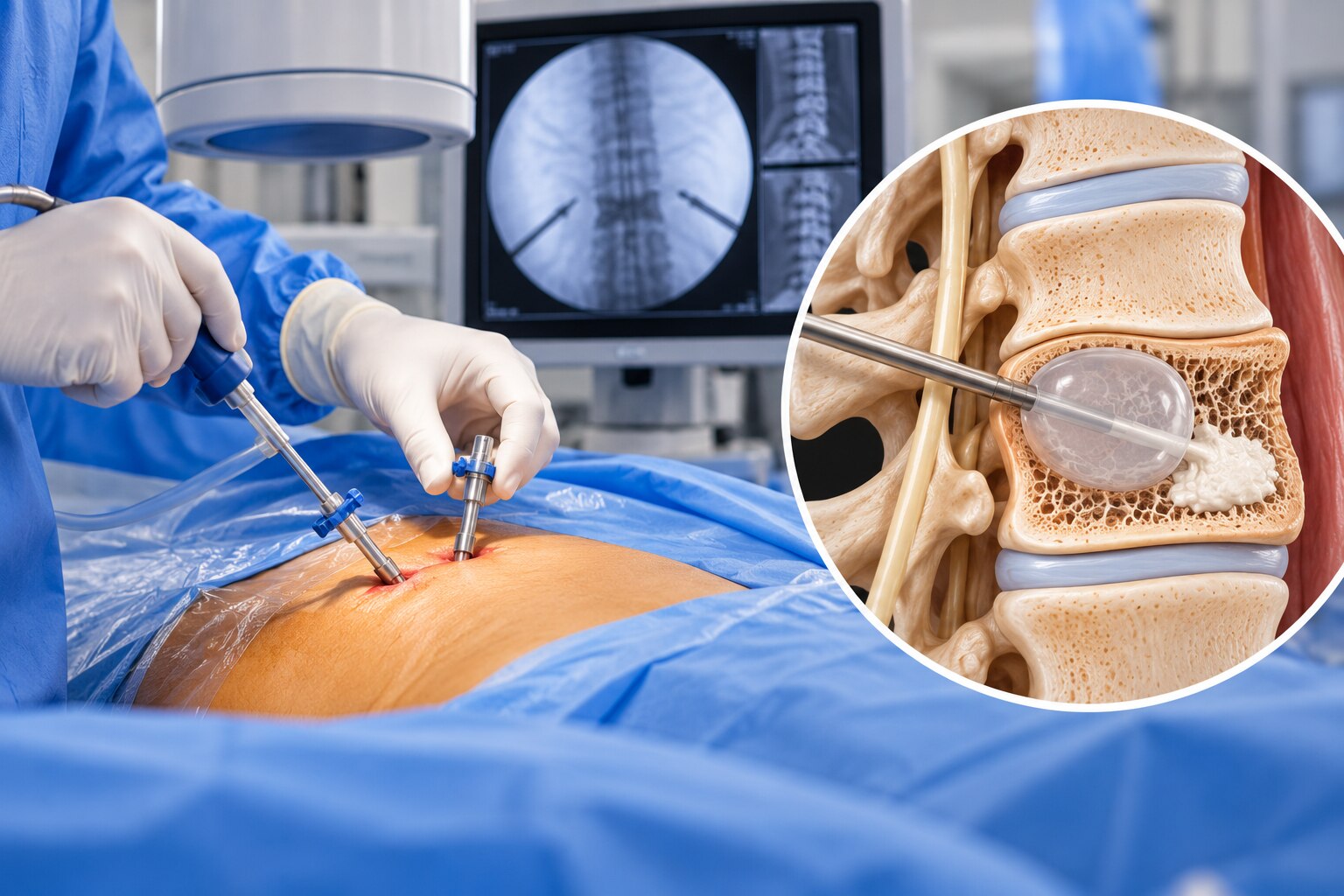
| Kyphoplasty | A balloon creates a cavity before bone cement is injected; it may restore some height but cannot cure osteoporosis. | Persistent, disabling fracture pain despite analgesia, safe mobilisation and osteoporosis treatment. |
| Vertebroplasty | Cement is injected directly without balloon expansion. | Selected painful fractures when cement stabilisation is considered, after specialist review; it offers less opportunity to correct collapse. |
| Conservative care | Pain medicine, activity modification without prolonged bed rest, osteoporosis treatment, and physiotherapy. | First choice for most stable fractures, especially when pain is improving over several weeks. |
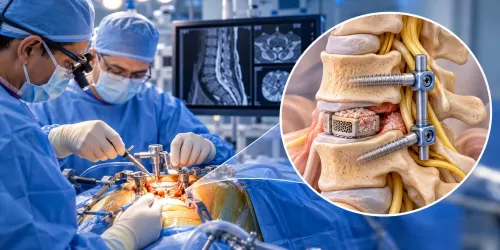
| Spinal fixation | Screws, rods, decompression, or reconstruction stabilise the spine. | Unstable collapse, posterior-wall damage, deformity, nerve compression, or failure of cement procedures; it carries greater surgical burden. |
A consultation for osteoporosis spine fracture treatment in jaipur should review the MRI or CT images, fracture age and level, neurological examination, anticoagulants, infection or cancer risk, and whether loading reproduces the pain. Kyphoplasty is safer when pain clearly comes from the fracture and there is no untreated infection or major instability.
New weakness, groin numbness, bladder or bowel loss, fever, or pain after major trauma requires urgent assessment, not an elective cement procedure. Any patient receiving kyphoplasty still needs a separate fracture-prevention plan.
What kyphoplasty can achieve, its risks, and the prevention plan afterward
Kyphoplasty can lessen fracture pain and help you stand or walk more comfortably, often soon after treatment. The balloon may restore some vertebral height, but it cannot reliably return the spine to normal or reverse osteoporosis.
1. Follow the discharge plan. Avoid lifting, bending and strenuous activity until your specialist permits them. Ask when you can shower, drive, return to work and begin physiotherapy.
2. Watch the puncture sites for increasing redness, swelling, drainage or fever. Cement leakage, bleeding, infection, allergic reactions, anaesthetic problems, rib or pedicle injury, and cement migration into a vein or the spinal canal are recognised complications.
3. Seek emergency help for new leg weakness, numbness, difficulty walking, loss of bladder or bowel control, severe worsening back pain, chest pain or breathlessness. These symptoms can signal nerve compression, spinal-cord injury or pulmonary cement embolism.
4. Continue fracture prevention after recovery. Arrange a formal osteoporosis assessment, including calcium and vitamin D review, and take prescribed osteoporosis medication when indicated by your fracture risk and medical history.
5. Reduce future falls with better lighting, secure footwear, handrails and review of medicines that cause dizziness. Add weight-bearing or muscle-strengthening exercise only when safe, guided by your clinician or physiotherapist.
A vertebral fragility fracture places you at high risk of another fracture. Kyphoplasty treats the painful collapse; the prevention plan protects the rest of your skeleton.
Choosing a Jaipur specialist and checking the total treatment cost
Registration is a starting check, not proof of experience. Search the doctor’s name in the Indian Medical Register, confirm the stated specialty, and ask how frequently they perform vertebral augmentation rather than relying on the title “spine specialist.”
Ask a kyphoplasty doctor in Jaipur these specific questions:
- How many kyphoplasty procedures do you perform, and how do you select patients with recent, unhealed fractures?
- Will fluoroscopy or CT guide needle placement, and how will cement leakage be monitored?
- Who will administer anaesthesia, and what emergency backup is available if breathing, bleeding, or neurological problems occur?
- What alternative applies if MRI shows canal compromise, an unstable fracture, or nerve compression?
A written estimate becomes meaningful only when each charge is visible.
| Item | What the estimate should identify | What can change it |
|---|---|---|
| Surgeon and anaesthesia | Separate professional fees | Longer or more complex surgery |
| Balloon and cement kits | Brand or kit count per treated level | Two or more vertebrae |
| Operating room and hospital | Theatre, bed, nursing, and medicines | An unexpected overnight stay |
| Tests and imaging | Blood tests, X-rays, MRI or CT | Missing pre-operative investigations |
Ask whether the kyphoplasty surgery cost in Jaipur includes taxes, medicines, follow-up visits, and treatment of coexisting illnesses. Dr Rahul Temani should be able to explain the expected benefit, alternatives, and added cost before you consent—not promise that kyphoplasty will remove every source of back pain.
Related services
Kyphoplasty Treatment for Spine Fractures in Jaipur Kyphoplasty Treatment for Spine Fractures in Jaipur Kyphoplasty is an advanced, minimally invasive spine procedure used to treat vertebral compression fractures (VCFs) caused by osteoporosis, trauma,... View service → |
Vertebroplasty Treatment Vertebroplasty is an advanced, minimally invasive spine procedure designed to treat painful compression fractures of the vertebrae. View service → |
Frequently asked questions
How does osteoporosis cause a vertebral compression fracture?
Osteoporosis removes mineral and weakens the vertebra’s internal trabecular bone. The vertebral body can then collapse under ordinary loading, causing sudden mid-back or lower-back pain after lifting, coughing, bending or a minor fall.
Which tests show whether a vertebral compression fracture is recent?
A spine X-ray can show vertebral height loss, while CT defines the bony anatomy. MRI is the key test for fracture activity: bone-marrow oedema on fluid-sensitive sequences such as STIR supports a recent fracture. A DEXA scan measures bone density and helps assess osteoporosis, but it does not date the fracture.
When is kyphoplasty appropriate for an osteoporotic fracture?
A spine specialist may consider kyphoplasty when imaging confirms a painful vertebral compression fracture, pain remains disabling despite appropriate initial treatment, and the pain matches the fractured level. The decision also depends on fracture age, collapse pattern, spinal stability, infection risk and general fitness for the procedure.
When is another treatment safer than kyphoplasty?
Bracing, carefully selected pain medicines, activity modification and osteoporosis treatment may be safer when pain is improving or the fracture is stable. Specialist assessment is urgent when you have leg weakness, numbness, bladder or bowel changes, fever, suspected infection, severe spinal instability or a fracture caused by a tumour.
What can kyphoplasty achieve, and what are its risks?
Kyphoplasty places inflatable balloons inside the collapsed vertebra before injecting bone cement. It can reduce fracture-related pain and improve mobility in selected patients, but it does not cure osteoporosis. Risks include cement leakage, nerve or spinal-cord compression, infection, bleeding, anaesthesia complications, blood clots and fractures in other vertebrae.
Keywords