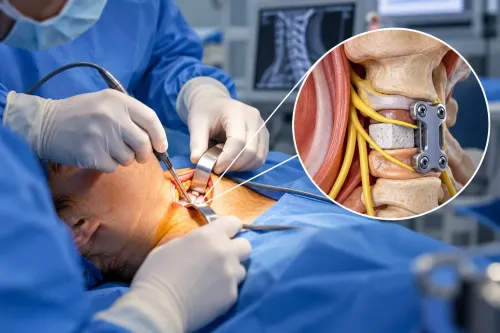
Before agreeing to fusion, you need to know which spinal level is causing your symptoms, what the operation physically involves, and whether a different procedure would fit better. You will also learn what to take to a Jaipur consultation, which tests are separate from surgery, and what recovery and fusion actually require.
Key takeaways
- TLIF fits when symptoms, examination, and imaging identify one painful or unstable lumbar level.
- Bring MRI or CT scans, reports, medication details, and a clear symptom timeline.
- Compare single-level TLIF with multilevel fusion, decompression, disc replacement, and nonsurgical care.
- Ask about expected pain relief, mobility, recovery limits, complications, and warning signs.
When TLIF fits chronic back pain—and when it does not
TLIF fits when your symptoms, examination, and imaging identify one painful or unstable lumbar level. Suitable structural problems include foraminal stenosis, recurrent disc herniation, degenerative spondylolisthesis, painful instability, selected spinal stenosis with instability, deformity, and painful disc degeneration.
| Finding | Supports TLIF | Does not support TLIF |
|---|---|---|
| Symptoms | Nerve-root pain travelling into the leg, weakness, numbness, or pain linked to movement at one level | Isolated, nonspecific axial low-back pain with no confirmed source |
| Examination and imaging | Neurological findings match MRI or CT compression; standing X-rays show slip, deformity, or instability; flexion-extension X-rays may show abnormal movement | Disc degeneration visible on a scan without matching symptoms, examination findings, or instability |
| Treatment choice | Fusion is needed after decompression, or stabilisation can address painful motion and restore foraminal height | Decompression alone can relieve the nerve without creating instability |
A careful history, neurological examination, MRI or CT, and standing lumbar X-rays must point to the same pain-generating level. The TLIF treatment details should match the stated goal: nerve decompression, stabilisation, back-pain relief, or all three. Relief of radicular leg pain is more predictable than relief of longstanding nonspecific back pain.
TLIF surgery for chronic back pain is the wrong choice for an unconfirmed pain source, untreated spinal infection, severe medical risk that makes surgery unsafe, or nerve compression treatable with decompression alone. A surgeon should also explain why fusion is preferable to continued non-operative care when the scan shows degeneration but no definite pain generator.
What happens during TLIF, step by step
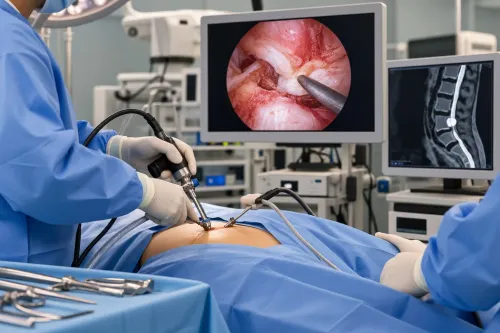
After admission, an intravenous line is placed and general anaesthesia puts you fully asleep. You are positioned face-down on a padded operating table, with your abdomen supported to reduce pressure and keep the spine aligned.
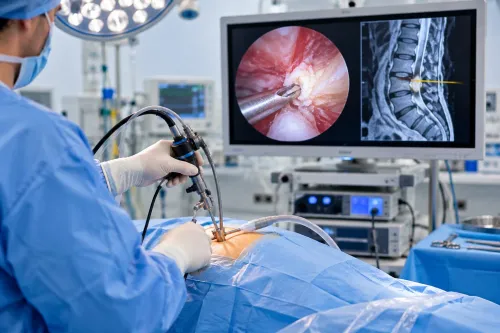
1. The surgeon confirms the planned lumbar level with imaging, makes an incision in the back, and reaches the spine from one side. In open TLIF, muscles are moved aside; minimally invasive TLIF uses smaller access channels and less muscle dissection.
2. The surgeon works through the neural foramen to identify and free the nerve root. Part or all of the facet joint, lamina, disc material, or ligament is removed when it is compressing the nerve.
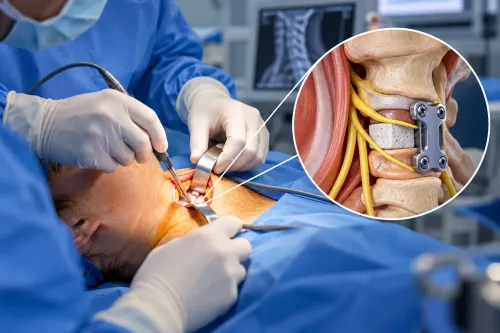
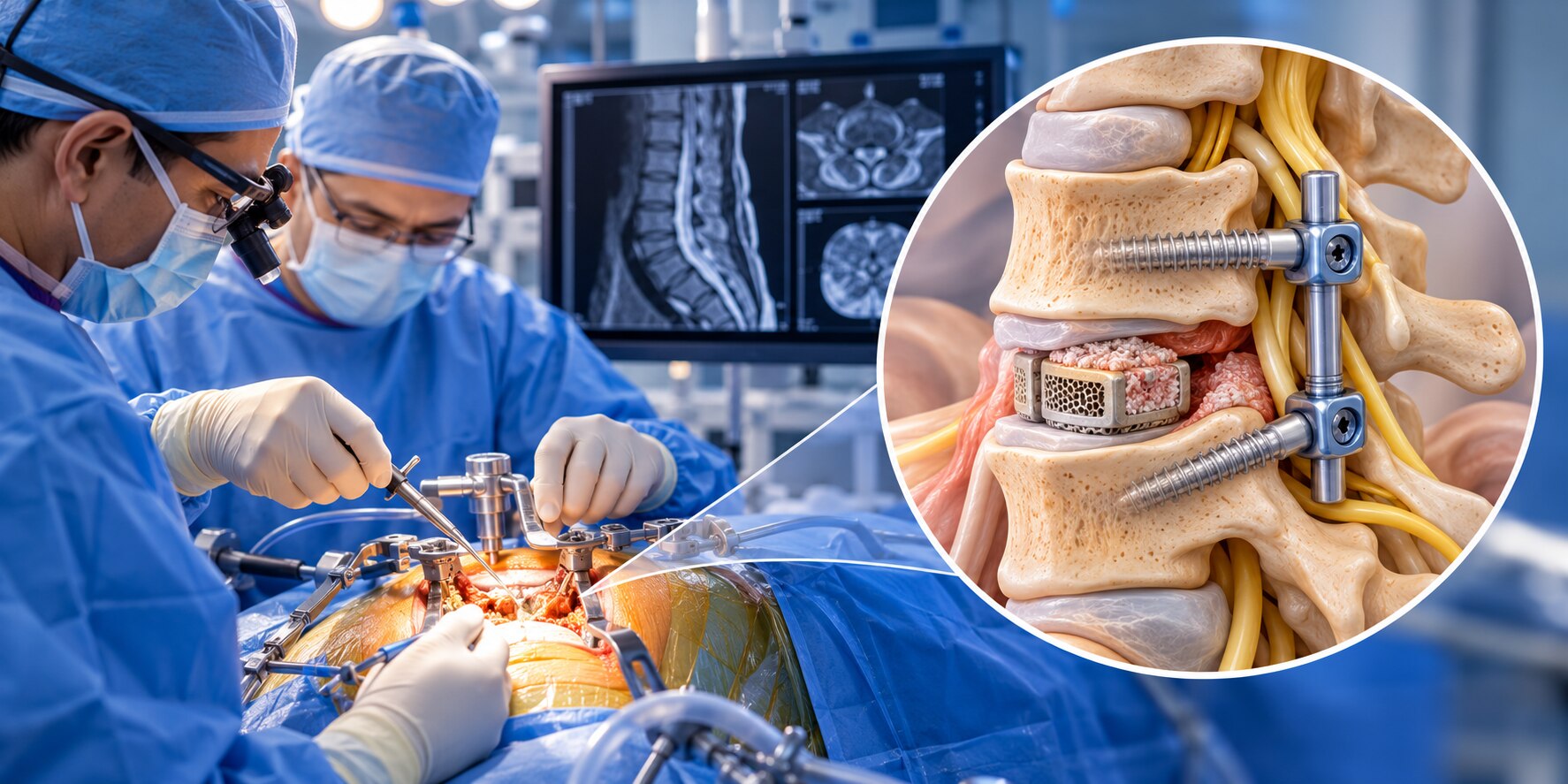
3. The damaged disc is removed, and the disc space is cleaned and prepared. Bone graft is packed into the space, followed by a cage or interbody spacer to restore disc height and support fusion.
4. Pedicle screws are placed in the vertebra above and below the treated level. Rods connect the screws, giving immediate stability while bone grows across the disc space.
5. Intraoperative imaging checks the level, cage position, spinal alignment, and screw placement before the wound is closed.
Open and minimally invasive approaches use the same core fusion and fixation steps; the incision and muscle disruption differ.
| Approach | Main difference | Core TLIF treatment details |
|---|---|---|
| Open | Larger exposure and more muscle dissection | Same decompression, cage, graft, screws, and rods |
| Minimally invasive | Smaller access channels and less muscle dissection | Same fusion and fixation sequence |
Ask whether the goal is nerve decompression, stabilisation, back-pain relief, or all three.
Single-level TLIF, multilevel fusion, and the main alternatives
Single-level TLIF treats one motion segment. Multilevel fusion treats two or more adjacent lumbar levels only when symptoms, examination, and imaging identify more than one pain-generating or unstable level; otherwise, extra levels add surgery without a clear benefit.
| Option | Route and purpose | When it applies |
|---|---|---|
| TLIF | One-sided posterior access; decompresses the nerve and fuses the level | Foraminal stenosis, instability, or painful spondylolisthesis |
| Decompression or laminectomy | Removes bone or ligament pressure without stabilising the segment | Nerve compression exists without instability |
| PLIF | Central posterior access to the disc space | Selected cases requiring posterior interbody fusion |
| ALIF | Reaches the disc through the abdomen | Suitable alignment or disc-height goals, after abdominal and vascular assessment |
| Lateral lumbar interbody fusion | Reaches the disc from the side | Selected levels and anatomy that permit a lateral route |
| Disc replacement | Preserves motion instead of fusing the level | Carefully selected patients without instability, major facet disease, or unsuitable degeneration |
The route depends on compression location, spinal alignment, previous operations, bone quality, abdominal or vascular considerations, and the need to restore foraminal height. A less extensive operation is preferable when instability is absent because decompression alone avoids unnecessary fusion.
The main tlif surgery benefits include nerve decompression, restored foraminal height, and reduced painful movement at an unstable level. Disc replacement is not a universal alternative: a painful or degenerated disc may also have facet disease, instability, deformity, or nerve compression that makes fusion more appropriate.
Patients comparing tlif surgery in jaipur should ask why each level and route is necessary.
What to bring to a Jaipur TLIF consultation and what testing includes
Bring the actual imaging, not only the radiology report. A useful answer to what does tlif surgery include in jaipur starts with matching your symptoms to the correct spinal level.
- MRI images on a disc or secure viewer, plus the written report.
- CT scans and standing lumbar X-rays, if available.
- Previous consultation notes, treatment records, injection reports, and physiotherapy details.
- A complete medication list, including diabetes medicines, blood thinners, steroids, and supplements.
- A timeline recording when pain, weakness, numbness, and walking difficulty began.
The Jaipur work-up can include a neurological examination and review of your MRI or CT. Standing and flexion-extension X-rays can show alignment and abnormal movement; blood tests, ECG, chest assessment, and anaesthesia review help identify medical risks before surgery.
Your clinician may also assess diabetes control, smoking, and bone health when osteoporosis is a concern. Dr Rahul Temani can help you check whether the proposed level, surgical approach, and examination findings agree with the imaging before you compare plans.
Ask for an itemised quotation for TLIF surgery in Jaipur. Confirm whether it lists consultation, investigations, anaesthesia, implants, hospital stay, medicines, brace, and follow-up separately, because a low headline figure may exclude several of these costs.
Related service
TLIF Treatment for Chronic Lower Back Pain TLIF Treatment for Chronic Lower Back Pain TLIF Surgery (Transforaminal Lumbar Interbody Fusion) Transforaminal Lumbar Interbody Fusion, commonly known as TLIF, is an advanced spinal fusion... View service → |
Expected benefits, recovery, and risks after TLIF
The main TLIF surgery benefits are nerve decompression, a wider foramen, less painful movement at an unstable level, and correction of selected alignment problems. TLIF surgery for chronic back pain is more likely to improve radicular leg pain when compression is the cause; longstanding central low-back pain is less predictable.
The cage and pedicle screws give early stability, but they do not create an instant fusion. Bone must grow across the disc space over several months, so follow-up X-rays, activity limits, and staged physiotherapy may be part of recovery.
Walking is usually encouraged soon after surgery. Your surgeon will individualise lifting, bending, driving, and return-to-work restrictions according to the number of fused levels, surgical approach, health, job demands, and progress; a fixed recovery promise deserves caution.
Discuss these risks before consenting:
- Infection or bleeding
- Blood clots
- Dural tear with cerebrospinal-fluid leakage
- Nerve-root injury
- Cage or screw malposition
- Persistent or recurrent pain
- Pseudoarthrosis, meaning failure of fusion
- Adjacent-level degeneration
- Further treatment, including revision surgery
Smoking, poor bone quality, diabetes, obesity, and some medicines can impair fusion or increase complications. Persistent pain after surgery does not automatically mean you need stronger pain medicine; it can reflect nerve damage, another pain generator, hardware symptoms, recurrent narrowing, or failed fusion.
Frequently asked questions
When does TLIF fit chronic back pain?
TLIF fits when symptoms, examination, and imaging identify one painful or unstable lumbar level, including selected cases of foraminal stenosis, recurrent disc herniation, degenerative spondylolisthesis, instability, stenosis with instability, deformity, or painful disc degeneration.
What happens during TLIF surgery?
The surgeon reaches the affected lumbar level, relieves pressure on the nerve, removes the damaged disc, places an interbody spacer and bone graft, and stabilises the segment with screws and rods.
How does single-level TLIF differ from multilevel fusion?
Single-level TLIF treats one affected segment. Multilevel fusion includes more than one level and requires a separate discussion about the treatment target, recovery demands, and alternatives.
What should you bring to a TLIF consultation in Jaipur?
Bring your MRI or CT images and reports, previous treatment records, a medication list, details of earlier operations, and a timeline of symptoms and functional limits.
What benefits and risks should you discuss after TLIF?
Discuss expected relief of nerve pain or mechanical back pain, activity and recovery milestones, infection, bleeding, nerve injury, blood clots, non-union, hardware problems, and symptoms at nearby spinal levels.
Keywords