Pott's spine is tuberculosis affecting the spinal column. Unlike common mechanical back pain, spinal tuberculosis is an infectious condition that can damage vertebrae, affect spinal alignment, create collections around the spine, and in some cases place pressure on neurological structures.
For this reason, Pott’s spine treatment requires proper diagnosis, tuberculosis-directed medical therapy, neurological assessment, and structured follow-up.
Patients in Jaipur and other parts of Rajasthan with persistent unexplained spinal pain, particularly when accompanied by constitutional or neurological symptoms, should not assume that the problem is simply muscular.
Why Spinal Tuberculosis Can Be Difficult to Recognise
Spinal tuberculosis may develop gradually.
Back pain can initially be the main complaint, which means patients may first try routine pain medication, massage, or physiotherapy.
Depending on the individual, other features can include:
- Persistent localised back pain
- Increasing stiffness
- Constitutional symptoms such as fever or night sweats in some patients
- Unexplained weight loss in some cases
- Changes in posture or spinal alignment
- Weakness or altered sensation in the legs
- Increasing difficulty walking
Not every patient develops every symptom, and the absence of prominent fever does not by itself exclude spinal tuberculosis.
How Is Pott's Spine Evaluated?
Evaluation begins with clinical history and examination, followed by appropriate investigations.
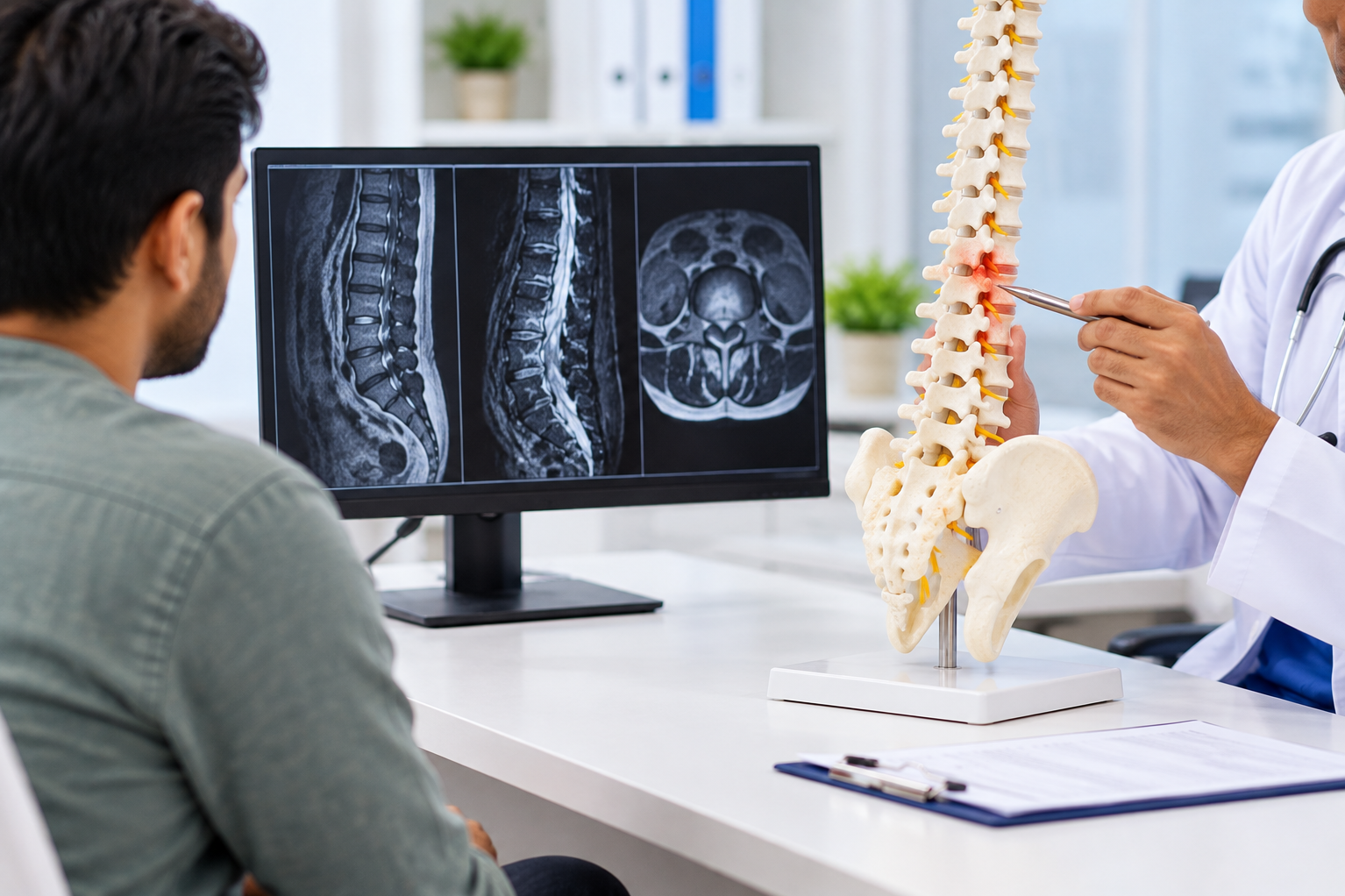
Imaging such as MRI can help assess vertebral involvement, discs, surrounding soft tissues, collections, spinal alignment, and possible neural compression.
Blood investigations may contribute to the overall assessment.
In selected situations, tissue sampling or microbiological and pathological testing may be needed to establish or confirm the diagnosis and guide management.
This is important because several infections, inflammatory conditions, and tumours can sometimes produce overlapping clinical or imaging appearances.
Is Surgery Always Required?
No.
Anti-tuberculosis therapy is central to treatment when spinal tuberculosis is diagnosed, with the medication regimen and duration determined according to appropriate clinical guidance and individual circumstances.
Many patients can be managed without spinal surgery when there is no indication for an operation.
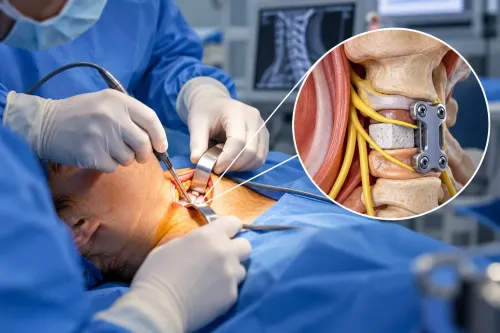
However, surgical assessment can become important when the disease produces significant or progressive neurological compromise, instability, severe deformity, substantial compression, or other complications requiring operative management.
The decision is therefore based on the effect of the infection on spinal structures and neurological function rather than the diagnosis alone.
Why Neurological Monitoring Matters
The spinal cord and nerve structures can be vulnerable when infection causes vertebral destruction, deformity, or compression.
Patients should report new weakness, altered sensation, worsening balance, or difficulty walking promptly.
Neurological examinations during follow-up help clinicians determine whether treatment is controlling the disease adequately or whether the management plan needs to change.
Treatment Does Not End When Pain Improves
Improvement in pain is encouraging, but follow-up remains important.
The treating team may monitor clinical symptoms, neurological status, medication adherence and tolerance, laboratory parameters where appropriate, and imaging when clinically required.
Stopping prescribed tuberculosis treatment simply because pain has decreased can compromise disease management. Medication changes should be made by the treating medical team.
Choosing Appropriate Spine Care
A patient with suspected or confirmed spinal tuberculosis may require coordinated care involving tuberculosis treatment and spine expertise.
Patients seeking Pott’s spine treatment in Jaipur can consult Dr Rahul Temani for evaluation of spinal involvement, stability, deformity, and neurological status as part of an appropriate multidisciplinary treatment pathway.
The key principle is early recognition followed by diagnosis-based treatment. Pott's spine is not simply another cause of ordinary backache; it is a spinal infection that deserves careful medical treatment, neurological surveillance, and surgical assessment when structural or neurological complications make it necessary.
Keywords