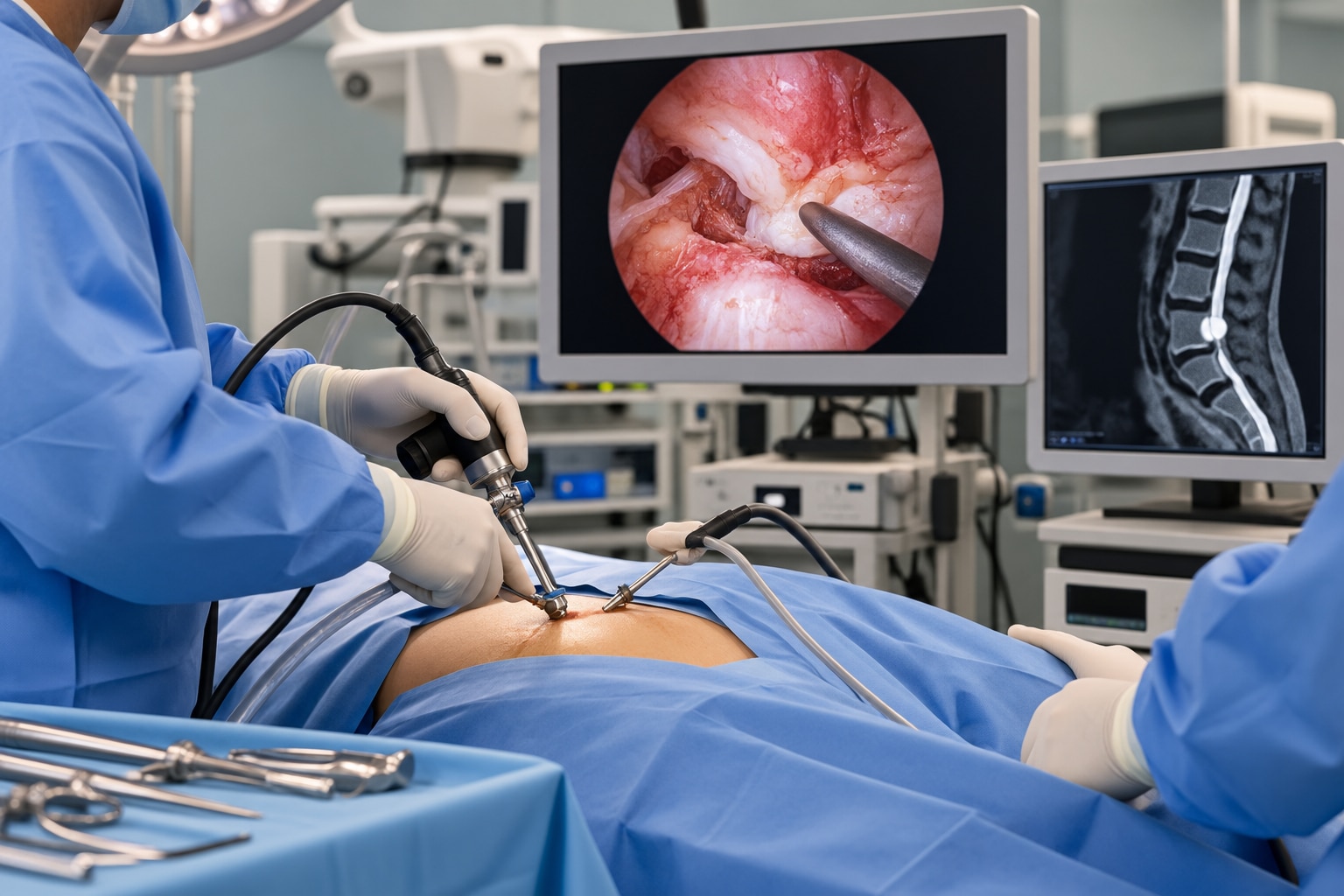
Leg pain from a lumbar disc does not automatically mean you need an operation. By the end, you will know which symptoms require emergency assessment, how doctors match an MRI to your examination, how long to try non-surgical care, and when surgery is more likely to help than harm.
Key takeaways
- Seek emergency care for bladder or bowel loss, saddle numbness, or rapidly worsening weakness.
- Choose surgery when MRI compression matches neurological findings and symptoms persist despite treatment.
- Microdiscectomy targets nerve-related leg pain, not every cause of back pain.
- Ask about the surgeon’s experience, expected benefit, risks, recovery, and alternatives.
When sciatica needs urgent assessment or elective surgery
New loss of bladder or bowel control, numbness around the genitals or anus, rapidly worsening weakness in one leg, or severe weakness affecting both legs requires emergency assessment. These symptoms can signal cauda equina syndrome or major nerve compromise, where delay risks permanent neurological damage.
| Situation | What to do | Why |
|---|---|---|
| Bladder or bowel changes, saddle numbness, or severe or worsening weakness | Seek emergency care now | Nerve compression may be time-critical |
| Disabling radiating leg pain despite a defined treatment trial, or progressive objective weakness | Arrange a prompt surgical assessment | Microdiscectomy may relieve a confirmed compressed nerve |
| Improving sciatica, intermittent numbness, or isolated low-back pain | Continue clinician-guided non-operative treatment | Immediate surgery usually has little justification |
The main answer to “when do i need microdiscectomy for sciatica in jaipur?” is not determined by location. Sciatica nerve compression surgery deserves review when leg pain remains severe and limits sleep, walking, work, or daily activities despite active care, exercise-based physiotherapy, appropriate medication, and any suitable injection treatment.
A scan alone does not decide. The MRI level and side must match your painful leg and examination findings, such as sensory loss, reflex change, or weakness. A right-sided bulge with only left-leg symptoms needs further explanation, not automatic surgery.
The same criteria apply in Jaipur as elsewhere; a nearby surgeon’s availability does not create an indication.
How the MRI and neurological examination must agree
The scan supports microdiscectomy for leg pain only when its level and side match the clinical examination. A left-sided L4–L5 disc compressing the left L5 nerve root should fit left-leg pain, altered sensation along the shin or big toe, a reduced reflex where relevant, or weakness lifting the foot or big toe.
An MRI report alone is insufficient. Disc bulges are common in people without symptoms, so removing an incidental bulge can leave the original pain unchanged. The surgeon must examine you and identify the nerve pattern before recommending surgery.
Use this checklist during the consultation:
- Confirm the exact disc level, compressed nerve root, and side on the images—not only in the written report.
- Ask whether your painful leg, numb area, reflex alteration, and weakness follow that nerve root.
- Check whether a right-sided bulge is being blamed for symptoms that occur only in the left leg. That mismatch calls for diagnostic review or a second opinion.
- Ask whether hip disease, spinal stenosis, spinal instability, infection, fracture, tumour, or recurrent herniation could explain the symptoms instead.
- Treat a visible bulge without matching clinical nerve compression as an uncertain cause, not an automatic surgical target.
Persistent symptoms after earlier disc surgery also need fresh imaging and examination; recurrent herniation is possible, but scar tissue or another diagnosis can produce similar pain. Seek another specialist opinion when surgery is recommended mainly for back pain, or when the MRI and neurological findings do not agree.
How long to try treatment before choosing slipped disc surgery
A reasonable conservative trial for stable sciatica usually lasts about six weeks, with reassessment sooner if pain is severe. Stay active within tolerable limits, avoid prolonged bed rest, and use exercise-based physiotherapy rather than passive treatment alone. A clinician can select appropriate oral analgesia and, when suitable, a targeted epidural or nerve-root injection.
Improving leg pain, walking and function usually argues against immediate surgery. Persistent pain that prevents sleep, work, walking or daily activities justifies earlier surgical review, particularly when treatment has produced little change. Progressive motor weakness changes the timetable: do not wait through a routine physiotherapy course before arranging assessment.
slipped disc surgery in Jaipur can offer faster leg-pain relief when MRI findings, examination and symptoms identify a suitable disc herniation. Many patients improve without an operation, so long-term differences can become smaller; your preference, neurological risk and functional loss matter.
| Option | Main trade-off | When it applies |
|---|---|---|
| Conservative care | Slower relief, avoids surgical risks | Symptoms are improving or remain manageable |
| Microdiscectomy | Often faster relief of nerve-root leg pain | An isolated disc fragment compresses a matching nerve |
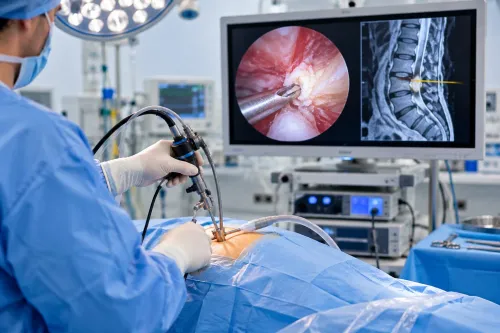
| Endoscopic discectomy | Smaller access route, but suitability depends on anatomy and surgeon experience | A suitable herniation can be reached endoscopically |
| Larger decompression or fusion | More extensive surgery and recovery | Stenosis or instability exists, not a straightforward isolated disc fragment |
Microdiscectomy and endoscopic discectomy both remove pressure from the nerve; “endoscopic” describes the access technique, not a separate diagnosis. Fusion is not routine for an uncomplicated disc fragment.
What microdiscectomy can relieve—and what it cannot promise
Microdiscectomy removes the herniated disc fragment pressing on a spinal nerve, with limited removal of nearby bone or ligament when needed to reach it. Most of the disc and spinal structures remain intact; this is not routine disc replacement or spinal fusion.
The aim is decompression, so microdiscectomy for leg pain offers a stronger expectation of relief from nerve-root sciatica than from isolated mechanical low-back pain. Leg pain often improves before numbness or weakness. Longstanding or severe nerve damage may not fully recover, and removing the fragment cannot guarantee that the disc will not herniate again.
Before consenting, discuss these risks with the surgeon:
- A dural tear, which can cause leakage of cerebrospinal fluid and sometimes requires repair or additional precautions.
- Infection or bleeding, including a collection that compresses the nerve.
- Nerve injury, with new or worsening pain, numbness, or weakness.
- Persistent symptoms if the pain source was not the compressed nerve root or another spinal structure is responsible.
- Recurrent sciatica from another disc fragment or recurrent disc herniation.
A “laser” label does not replace a confirmed diagnosis, adequate nerve decompression, or technique chosen for your anatomy. Disc location, nerve compression, safety, and the surgeon’s expertise matter more than marketing terminology.
Questions to ask before selecting a microdiscectomy surgeon in Jaipur
Before choosing a microdiscectomy surgeon in Jaipur, ask for a diagnosis tied to your examination, not an operation based on an MRI image alone. Confirm which nerve root is compressed, whether the MRI side and level match your pain and examination, and whether you have documented weakness, sensory loss, or a reflex change.
Ask these questions during the consultation:
- What treatment have I tried, and for how long?
- What improvement should I expect in leg pain compared with back pain?
- Why is microdiscectomy preferable to physiotherapy, medication, an injection, or endoscopic treatment in my case?
- What happens if symptoms recur?
- Which finding makes surgery worthwhile now: persistent disabling pain, neurological loss, or both?
| Option | What it addresses | What to clarify |
|---|---|---|
| Physiotherapy or medication | Improving symptoms without surgery | Why has a defined trial failed? |
| Injection | Temporary diagnostic or pain relief | What will the result change? |
| Endoscopic treatment | Alternative access to the disc | Why does the anatomy favour it? |
| Microdiscectomy | Matching nerve-root compression | What benefit and neurological risk are expected? |
Seek a second opinion if surgery is recommended mainly for back pain, or if the MRI and symptoms do not match. A consultation with Dr Rahul Temani can help review these findings and alternatives before deciding on slipped disc surgery in Jaipur.
The decision should rest on clinical match, neurological risk, expected benefit, and your preferences.
Related services
Microdiscectomy Surgery for Slip Disc & Sciatica Relief Microdiscectomy Surgery for Slip Disc & Sciatica Relief Microdiscectomy Surgery for Herniated Disc & Sciatica Relief Microdiscectomy is a minimally invasive spinal surgery performed to relieve pressure on... View service → |
Advanced Endoscopic Spine Surgery for Back & Neck Pain Relief Advanced Endoscopic Spine Surgery for Back & Neck Pain Relief Endoscopic Spine Surgery – Advanced Minimally Invasive Treatment for Spine Disorders Endoscopic Spine Surgery is a modern, minimally invasive... View service → |
Frequently asked questions
When does sciatica need urgent assessment?
Seek emergency assessment for new bladder or bowel control loss, numbness around the genitals or anus, rapidly worsening weakness in one leg, or severe weakness in both legs. These symptoms can indicate cauda equina syndrome or major nerve compromise.
How do MRI findings and the neurological examination guide microdiscectomy?
Microdiscectomy is best considered when the MRI shows a disc herniation compressing the nerve that matches your pain, weakness, reflex changes, or sensory loss. An MRI finding without matching symptoms does not establish the need for surgery.
How long should you try treatment before choosing slipped disc surgery?
The decision depends on symptom severity, neurological changes, response to treatment, and daily limitations. Persistent disabling leg pain after a structured non-surgical treatment plan supports a surgical discussion, while progressive weakness requires earlier assessment.
What can microdiscectomy relieve?
Microdiscectomy removes disc material pressing on a spinal nerve and is designed to relieve sciatica or nerve-related leg pain. It cannot promise complete relief of longstanding back pain, reverse permanent nerve damage, or prevent future disc problems.
What should you ask a microdiscectomy surgeon in Jaipur?
Ask which MRI finding matches your symptoms, why surgery is recommended now, what alternatives remain, the expected recovery time, possible complications, the surgeon’s relevant experience, and what happens if symptoms persist.
Related service
Minimally Invasive Spine Surgery Minimally Invasive Spine Surgery (MISS) for Faster Recovery & Lasting Pain Relief Minimally Invasive Spine Surgery, commonly known as MISS, is an advanced surgical approach used to... View service → |
Keywords