A report mentioning a disc bulge, protrusion, extrusion, or slip disc can sound alarming. Yet an MRI finding by itself does not determine the severity of a patient's condition or automatically establish the need for surgery.
Effective slip disc treatment begins by matching the imaging findings with symptoms and a clinical examination.
For patients in Jaipur, understanding this distinction can prevent unnecessary anxiety while also helping identify situations where persistent nerve compression requires closer attention.
What People Mean by a Slip Disc
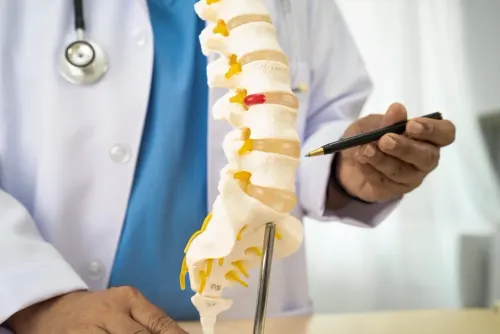
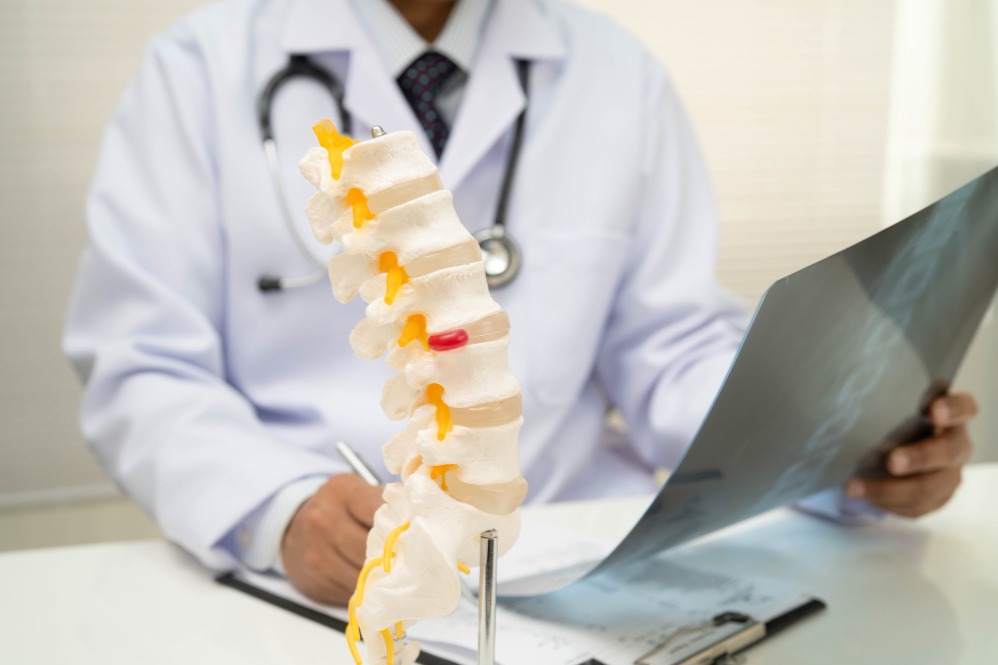
The discs between spinal vertebrae provide cushioning and help distribute loads during movement. A disc can undergo age-related changes or become displaced beyond its usual boundary.
The term slip disc is commonly used for several disc-related abnormalities, although the disc does not literally slip out of position.
A lumbar disc problem may irritate or compress a nearby nerve and cause:
- Lower back pain
- Pain travelling into one leg
- Tingling or numbness
- Burning or electric-like pain
- Weakness in specific muscle groups
A cervical disc problem can produce similar symptoms in the neck, shoulder, arm, or hand.
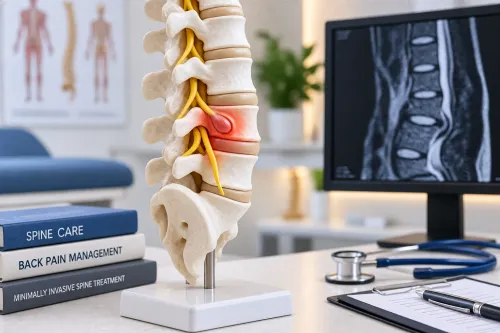
Why MRI Findings Need Clinical Correlation
MRI is valuable because it provides detailed images of discs, nerves, and other spinal structures. However, imaging can reveal abnormalities in people who have few or no symptoms.
This is why treatment should not be based on words such as bulge or herniation alone.
A clinician needs to determine whether the affected disc corresponds to the patient's pain distribution and neurological findings.
For example, a disc abnormality at one lumbar level may be unlikely to explain symptoms associated with a completely different nerve distribution. Clinical correlation helps identify whether the imaging finding is genuinely relevant.
How Slip Disc Treatment Is Usually Planned
When there is no urgent neurological concern, conservative management may be considered first.
Depending on individual circumstances, this can involve:
- Short-term activity modification
- Appropriate medication
- Guided physiotherapy
- Gradual return to movement
- Ergonomic changes
- Core and spinal conditioning at an appropriate stage
Prolonged bed rest is generally not the objective of rehabilitation. Movement and activity are usually reintroduced according to symptoms and clinical guidance.
Some patients may also be evaluated for targeted interventions when pain remains significant despite initial management.
When Surgery Enters the Discussion
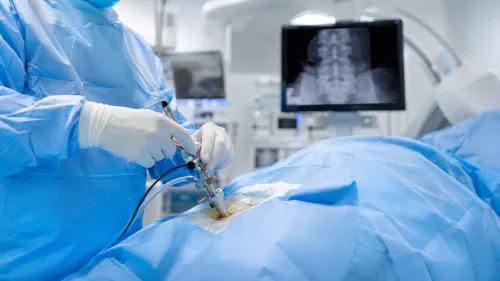
Surgery is generally considered selectively rather than simply because a disc abnormality appears on MRI.
A surgical opinion may become more relevant when there is progressive weakness, significant neurological compromise, persistent disabling nerve pain despite appropriate conservative care, or another clinical reason that makes continued observation unsuitable.
The aim of disc surgery, when indicated, is usually to address the structure responsible for nerve compression.
Mistakes That Can Delay Appropriate Recovery
One common mistake is treating all back pain as a slip disc without establishing the diagnosis.
Another is avoiding movement indefinitely because of fear that activity will worsen the MRI finding. At the opposite extreme, aggressively exercising through severe radiating pain or neurological symptoms can also be inappropriate.
Patients should also avoid comparing MRI terminology without considering clinical context. A large disc finding does not always produce severe symptoms, while a strategically located smaller lesion can sometimes significantly irritate a nerve.
Questions Worth Asking During Evaluation
A useful spine consultation should clarify:
- Which disc is affected?
- Is a nerve actually compressed?
- Does the MRI explain my symptoms?
- Do I have measurable neurological weakness?
- Which conservative treatments are appropriate?
- What would make surgery necessary?
- What changes should prompt earlier reassessment?
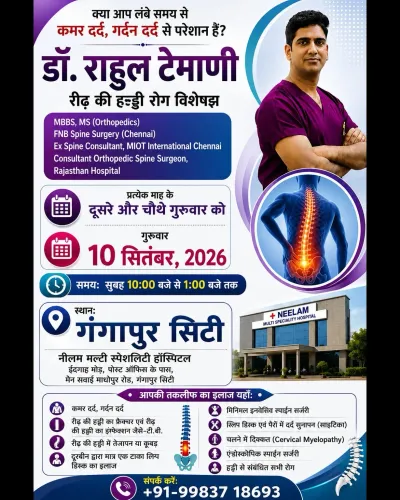
For people seeking slip disc treatment in Jaipur, Dr Rahul Temani can evaluate the relationship between symptoms, examination findings, and available imaging before discussing treatment options.
An MRI is an important diagnostic tool, but it should support clinical decision-making rather than replace it. The most appropriate treatment comes from understanding the person behind the scan and determining how significantly the disc problem is affecting nerves, mobility, and daily function.
Keywords