Choosing UBE requires more than comparing incision photographs: the correct comparison depends on whether you need a discectomy, decompression or fusion, and whether your anatomy can be treated safely through two portals. You will be able to match the technique to your diagnosis, weigh likely procedural benefits against trade-offs, and prepare specific questions for a Jaipur consultation.
Key takeaways
- UBE uses separate viewing and working portals with continuous irrigation.
- Confirm the spinal diagnosis before comparing UBE with traditional surgery.
- Choose another operation when instability, severe deformity or extensive decompression requires it.
- Ask about surgeon experience, revision plans, risks, recovery and total treatment costs.
How does UBE spine surgery work, and how is it different from other approaches?
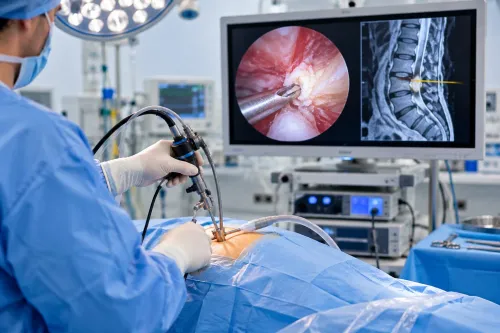
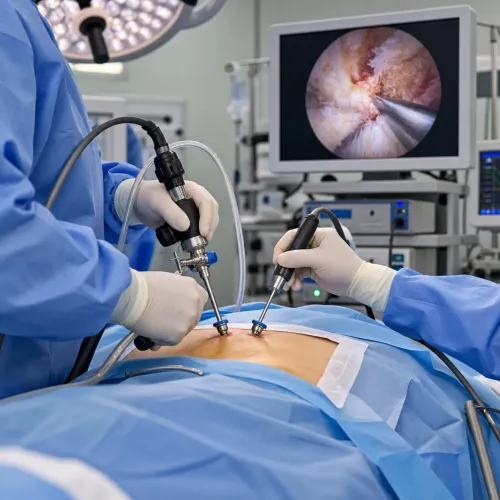
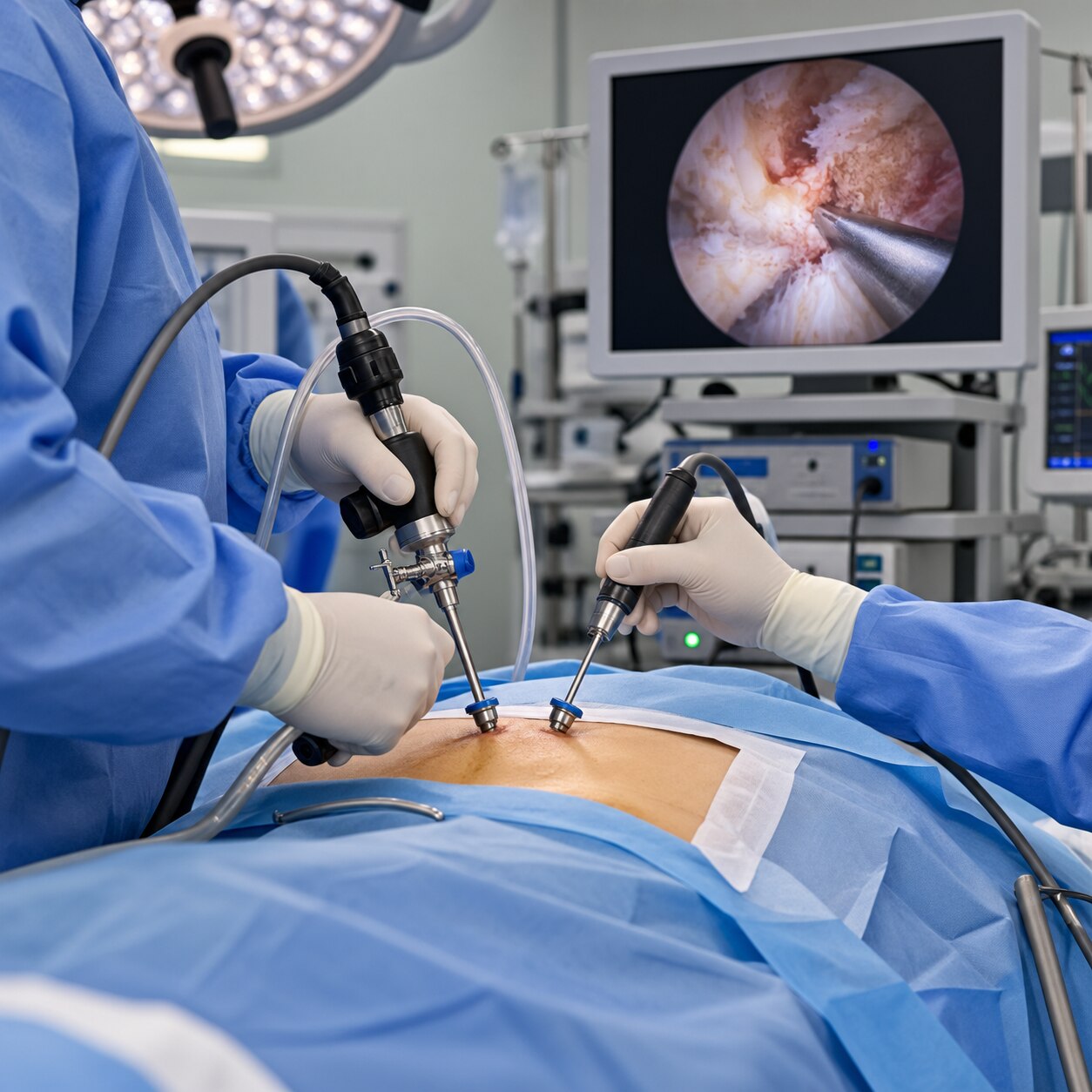
Unilateral biportal endoscopy (UBE) uses two small portals rather than one. One carries the endoscope and continuous irrigation; the other carries working instruments. UBE is a technique, not a diagnosis, so the target must first be confirmed.
- MRI or CT review identifies the level and compression; a neurological examination checks whether the scan matches your weakness, numbness or reflex changes.
- After anaesthesia, you are positioned, the skin is prepared, and the surgeon places the portals beside the spine.
- Continuous visualisation guides a laminotomy, medial facetectomy, foraminal decompression or disc-fragment removal when indicated.
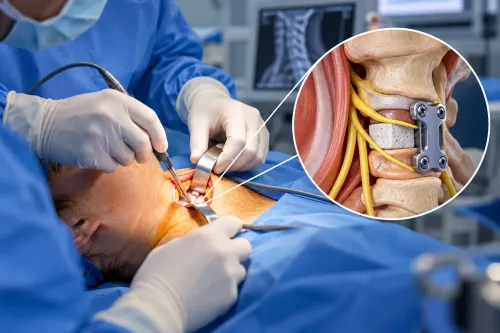
- One-sided access can permit bilateral decompression. Selected patients may also undergo endoscopic lumbar interbody fusion.
- The surgeon removes instruments, closes the portals, and checks leg strength, sensation and other neurological findings during early recovery.
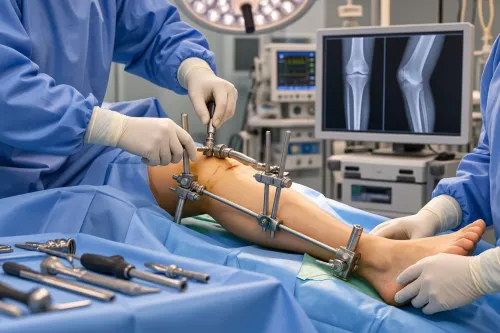
UBE differs from uniportal endoscopy because the camera and instruments use separate channels. Microscopic decompression uses a microscope through a small exposure; tubular surgery uses a fixed working tube; open surgery uses a larger exposure and usually more muscle retraction.
UBE spine surgery in Jaipur still requires specialised equipment and trained staff. Excessive irrigation pressure or poor fluid outflow can cause tissue swelling or rare fluid-related complications. Some anatomy is difficult to reach; the learning curve can increase operating time, and the surgeon may convert to another operation.
For an endoscopic spine surgery comparison:
| Approach | Access and view | Practical distinction |
|---|---|---|
| UBE | Two portals, continuous endoscopic view | Flexible instruments; possible bilateral access |
| Uniportal endoscopy | One combined portal | Less instrument freedom |
| Microscopic or tubular surgery | Microscope or tube | Familiar instruments, restricted viewing |
| Open surgery | Wider exposure | Broad access, greater tissue disruption |
Which benefits of UBE are established, and how does it compare with traditional surgery?
The fairest comparison is procedure-specific: UBE discectomy versus microscopic or open discectomy, UBE decompression versus microscopic decompression, and UBE fusion versus minimally invasive or open fusion.
The main unilateral biportal endoscopy benefits are smaller access wounds and less paraspinal-muscle disruption; potentially less blood loss, earlier mobilisation and a shorter admission are likely procedural advantages, not guarantees.
| Dimension | UBE | Matched alternative |
|---|---|---|
| Incision and muscle | Two small portals; less muscle detachment | One incision or tubular access; disruption varies |
| Visualisation | Endoscope with continuous irrigation and magnified view | Microscope or direct open view |
| Bone removal | Targeted laminotomy or facetectomy | Similar target; extent depends on decompression |
| Blood loss and pain | Often lower blood loss and early pain relief | Depends on operation and tissue disruption |
| Operating time | May be shorter after experience develops | Often more predictable for an experienced team |
| Stay and mobilisation | Potentially earlier walking and shorter admission | Depends on pain, health and procedure |
| Return to activity | May be earlier after decompression | Depends on healing, work and lifting demands |
| Equipment and expertise | Endoscope, irrigation, instruments and trained surgeon | Microscope, open instruments and relevant expertise |
Comparative studies in selected lumbar disc-herniation and stenosis patients often find similar improvements in leg pain, back pain, disability and satisfaction after UBE and microscopic surgery. They do not establish superior long-term pain relief; much evidence is retrospective, single-centre, short-term and affected by differing surgeon experience.
UBE still carries dural tear, nerve injury, bleeding, infection, incomplete decompression, recurrent disc herniation, anaesthesia complications and conversion risks. Later fusion may be needed; fusion adds nonunion, hardware failure and adjacent-segment problems. UBE versus traditional spine surgery therefore requires diagnosis, surgical extent, equipment, anaesthesia, health and surgeon experience—not incision size alone.
Who is a suitable UBE candidate, and when is another operation safer?
UBE is most suitable when a defined nerve-compressing lesion matches your symptoms, imaging and examination. Common candidates include lumbar disc herniation, lumbar central or lateral-recess stenosis, foraminal stenosis, and selected cervical or thoracic lesions. MRI or CT should identify the target level, while neurological findings confirm that it explains your weakness, numbness or radiating pain.
A suitable plan requires:
- Acceptable spinal stability, without major instability that requires fusion.
- A defined level and a clear goal of decompression rather than reconstruction.
- Anatomy that the planned portals can reach safely.
- No tumour, infection, severe kyphosis or scoliosis, or extensive multilevel deformity requiring reconstruction.
Severe neurological compromise may require urgent treatment rather than elective comparison. New bladder or bowel dysfunction, saddle numbness, or rapidly worsening leg weakness needs prompt medical assessment.
Pain severity alone does not establish a surgical indication. If you have no progressive neurological deficit or structural reason for surgery, physiotherapy, medicines, activity modification or other nonsurgical care remains relevant.
A small incision does not mean minor disease: UBE can still involve bone removal and nerve-root risks, does not treat every cause of back pain, cannot guarantee relief, and does not eliminate fusion. Faster early recovery does not prove better long-term results.
For ube spine surgery for benefits in jaipur, ask what the actual diagnosis supports; ube versus traditional spine surgery is not a choice between labels but between operations suited to your anatomy.
What effort, recovery and long-term questions should you expect after UBE?
Expect a planned journey, not an instant fix. Before UBE, your team should review MRI or CT findings against your examination, medicines, allergies, previous operations and medical history, then give fasting instructions and prepare you for anaesthesia. Endoscopic surgery does not automatically mean awake surgery or same-day discharge.
- Ask when you can walk, leave hospital, drive, return to desk work, lift, exercise and start or progress physiotherapy.
- Clarify how to clean and cover the small wounds, when dressings come off, and which movements or lifting limits apply.
- Get the follow-up schedule, including wound review, neurological checks and imaging if symptoms persist or recur.
- Ask which symptoms need urgent review: new or worsening leg weakness, loss of bladder or bowel control, saddle numbness, fever, wound drainage, severe headache, uncontrolled pain or rapidly increasing swelling.
Admission depends on the operation, comorbidities, neurological status, pain control, bleeding risk and whether fusion was performed. The unilateral biportal endoscopy benefits may include less tissue disruption, but recovery and complications remain possible, including dural tear, nerve injury, infection, haematoma, incomplete decompression and recurrent disc herniation.
For an honest endoscopic spine surgery comparison, ask how patient-reported pain and disability scores, recurrence, reoperation, incomplete decompression and later fusion are tracked. Compare the exact procedure with its true alternative, because “minimally invasive” does not establish better long-term results.
What should you verify before choosing UBE in Jaipur?
Do not schedule UBE spine surgery in Jaipur until the proposed operation is written in plain language and matched to your scans. Ask for:
- The diagnosis, MRI or CT correlation, target level, number of levels and exact procedure name
- Decompression versus fusion, expected admission, activity restrictions, rehabilitation and follow-up
- The actual alternative operation, not “traditional surgery”
| UBE option | Compare it with | Verify |
|---|---|---|
| UBE discectomy | Microscopic or open discectomy | Pain relief, recurrence, blood loss, operating time and return to activity |
| UBE decompression | Microscopic decompression | Bone removal, nerve-root access, incomplete decompression and later instability |
| UBE fusion | Minimally invasive or open fusion | Implants, nonunion, hardware failure, admission and revision risk |
Ask the surgeon how often they perform that specific UBE operation, where they are on its learning curve, and their complication, dural-tear, nerve-injury and conversion rates. Request reported patient-reported pain and disability outcomes, plus the backup plan if the portals cannot provide safe decompression or stabilisation.
Verify general anaesthesia arrangements, neurological monitoring, infection control, emergency support, implant availability when fusion is possible and who will review you after discharge. Confirm an emergency postoperative telephone contact.
Request an itemised estimate for imaging, implants, anaesthesia, hospitalisation, medicines, follow-up and possible revision. Prices, availability and outcomes vary by hospital and case complexity. If you searched UBE spine surgery for benefits in Jaipur, treat benefits as case-dependent, not guaranteed.
An in-person consultation with Dr Rahul Temani can test the plan against your examination, stability, prior surgery and individual risks.
Related services
UBE Spine Surgery (Unilateral Biportal Endoscopy) UBE Spine Surgery (Unilateral Biportal Endoscopy) UBE Spine Surgery (Unilateral Biportal Endoscopy) for Minimally Invasive Spine Treatment Unilateral Biportal Endoscopy, commonly known as UBE Spine... View service → |
Advanced Endoscopic Spine Surgery for Back & Neck Pain Relief Advanced Endoscopic Spine Surgery for Back & Neck Pain Relief Endoscopic Spine Surgery – Advanced Minimally Invasive Treatment for Spine Disorders Endoscopic Spine Surgery is a modern, minimally invasive... View service → |
Frequently asked questions
How does UBE spine surgery work?
UBE, or unilateral biportal endoscopy, uses two small portals: one for the endoscope and irrigation, and one for surgical instruments.
What are the established benefits of UBE compared with traditional spine surgery?
UBE can reduce muscle disruption and incision size, but benefits depend on the diagnosis, surgical goal, surgeon experience and comparison procedure.
Who is a suitable candidate for UBE spine surgery?
Candidates need a confirmed condition that UBE can treat safely, such as selected cases requiring nerve decompression or disc treatment. Imaging and examination determine suitability.
When might traditional spine surgery be safer than UBE?
Open or conventional surgery may be safer for instability, major deformity, extensive decompression, complex reconstruction or cases needing implants and broad access.
What recovery questions should you ask after UBE?
Ask when you can walk, drive, work and exercise; how pain will be managed; which warning signs need urgent review; and when follow-up imaging is required.
Keywords