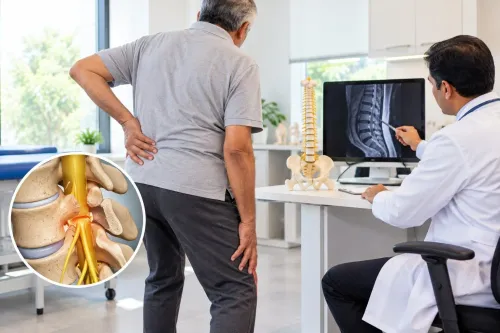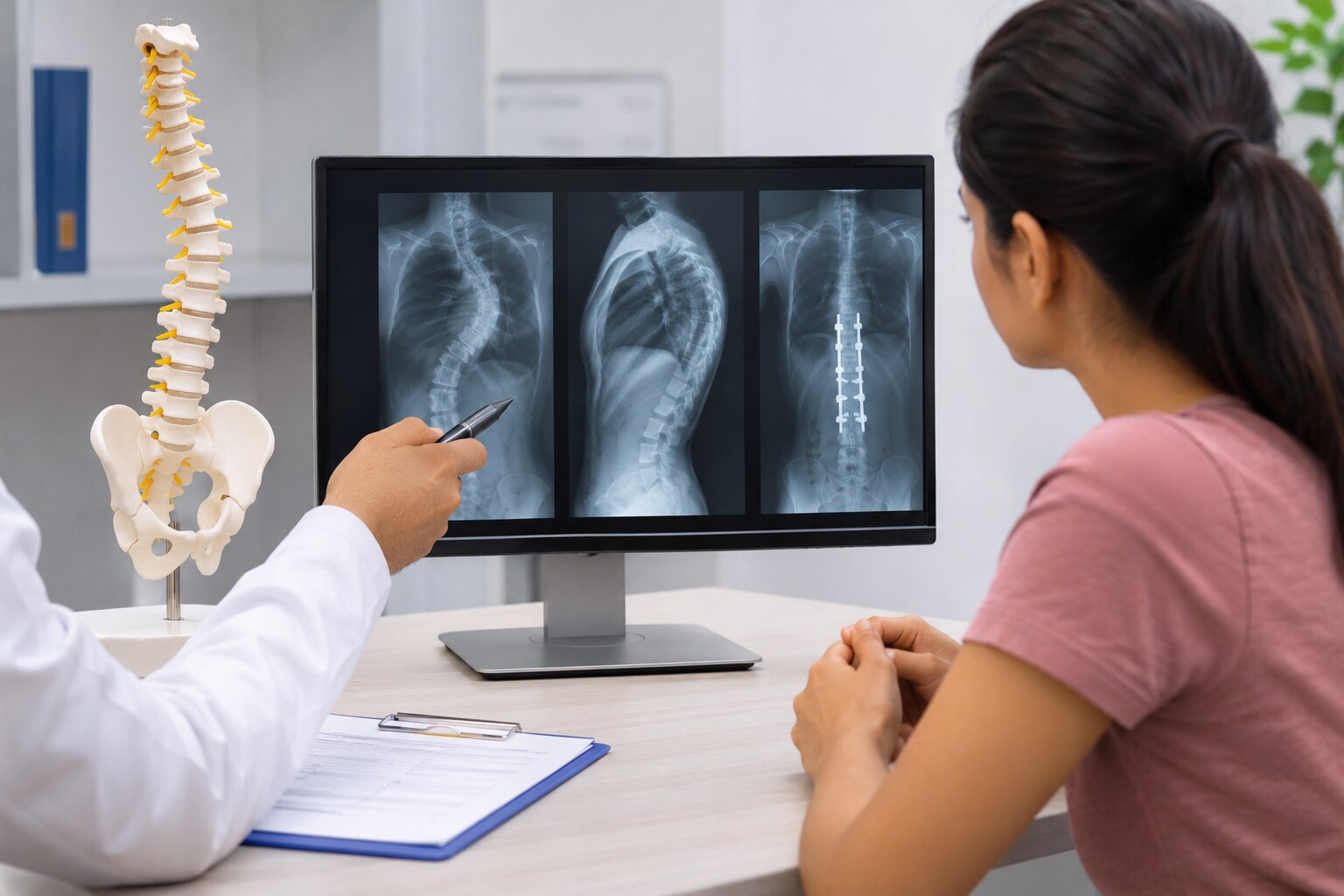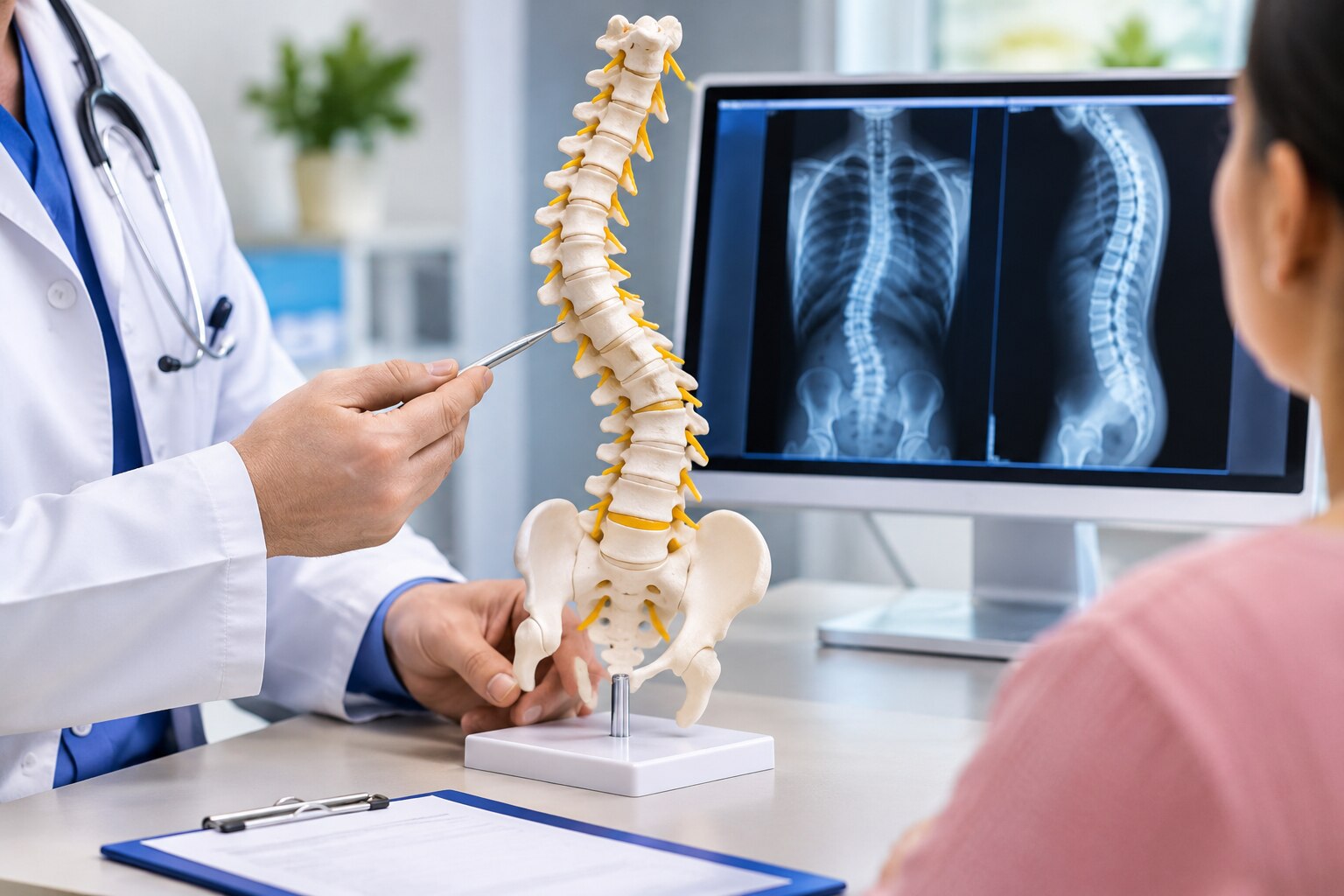
Severe pain from a vertebral compression fracture can make standing, walking, sleeping, and rehabilitation difficult, but vertebroplasty is not a universal solution. You will learn how doctors identify the painful fracture, what benefit the procedure can realistically provide, how it compares with other treatments, and when its risks outweigh its advantages.
Key takeaways
- Vertebroplasty stabilizes painful fractures; it does not rebuild collapsed bone.
- Confirm the painful vertebra with MRI findings that match your symptoms.
- Ask how vertebroplasty compares with kyphoplasty, bracing, and fixation surgery.
- Discuss cement leakage, infection, nerve injury, and new fractures before treatment.
What pain relief and mobility improvements can vertebroplasty provide?
The realistic vertebroplasty benefits for spinal compression fractures come from mechanical stabilization, not repair. A needle delivers polymethylmethacrylate cement into the fractured vertebral body, where it hardens and can reduce painful movement. Appropriate patients may experience faster relief from severe fracture pain, easier standing or walking, better participation in rehabilitation, and less need for analgesics.
Vertebroplasty does not remove the fracture, rebuild lost vertebral height, or reliably correct the wedge deformity or kyphosis. Spinal compression fracture relief is most plausible when pain is severe and disabling, the fracture is recent and unhealed, and imaging confirms that level as the pain source.
| Study | Patients | Finding |
|---|---|---|
| 2009 sham-controlled trials | Broadly selected painful osteoporotic fractures | No significant pain or disability advantage over sham treatment |
| VAPOUR | Severe pain, generally fractures 6 weeks old or less | Pain below 4/10 at 14 days: 44% after vertebroplasty versus 21% with control treatment |
| VERTOS IV | Acute osteoporotic fractures with moderate-to-severe pain | No significant advantage over sham treatment |
These results do not support routine treatment for every osteoporotic fracture. Vertebroplasty is more defensible when conservative care has failed or pain prevents basic movement and rehabilitation; it is less suitable when pain is mild, improving, or caused by another condition.
How do doctors confirm that the fractured vertebra is causing your pain?
Doctors confirm the painful vertebra by matching your symptoms and examination with imaging that shows an active, unhealed fracture—not simply an old collapse seen on MRI.
They look for:
- Pain directly over the suspected level, often worsened by standing, sitting up, bending, coughing, or turning
- Local tenderness when the vertebra is pressed
- A neurological examination showing whether leg strength, sensation, reflexes, and walking are affected
- A symptom pattern that fits the suspected vertebral level rather than a different source
Plain X-rays can show a wedge-shaped or collapsed vertebra and provide comparison with earlier images. CT defines the bony anatomy, including posterior-wall damage and retropulsed bone. MRI, especially STIR or another fat-suppressed fluid-sensitive sequence, can show bone-marrow edema, which supports a recent active fracture.
MRI also checks for infection, malignancy, spinal stenosis, another fracture, or nerve and spinal-cord compression. Fracture age matters because vertebroplasty for fracture pain is less likely to help an old, healed vertebra. Cementing the wrong level is a recognized failure mode.
Doctors also test whether another condition explains the pain. Facet-joint pain, sacroiliac disease, muscular deconditioning, or another untreated problem makes vertebroplasty less likely to provide relief, even when a vertebral fracture appears on a scan.
What happens during vertebroplasty and how soon can you move afterward?
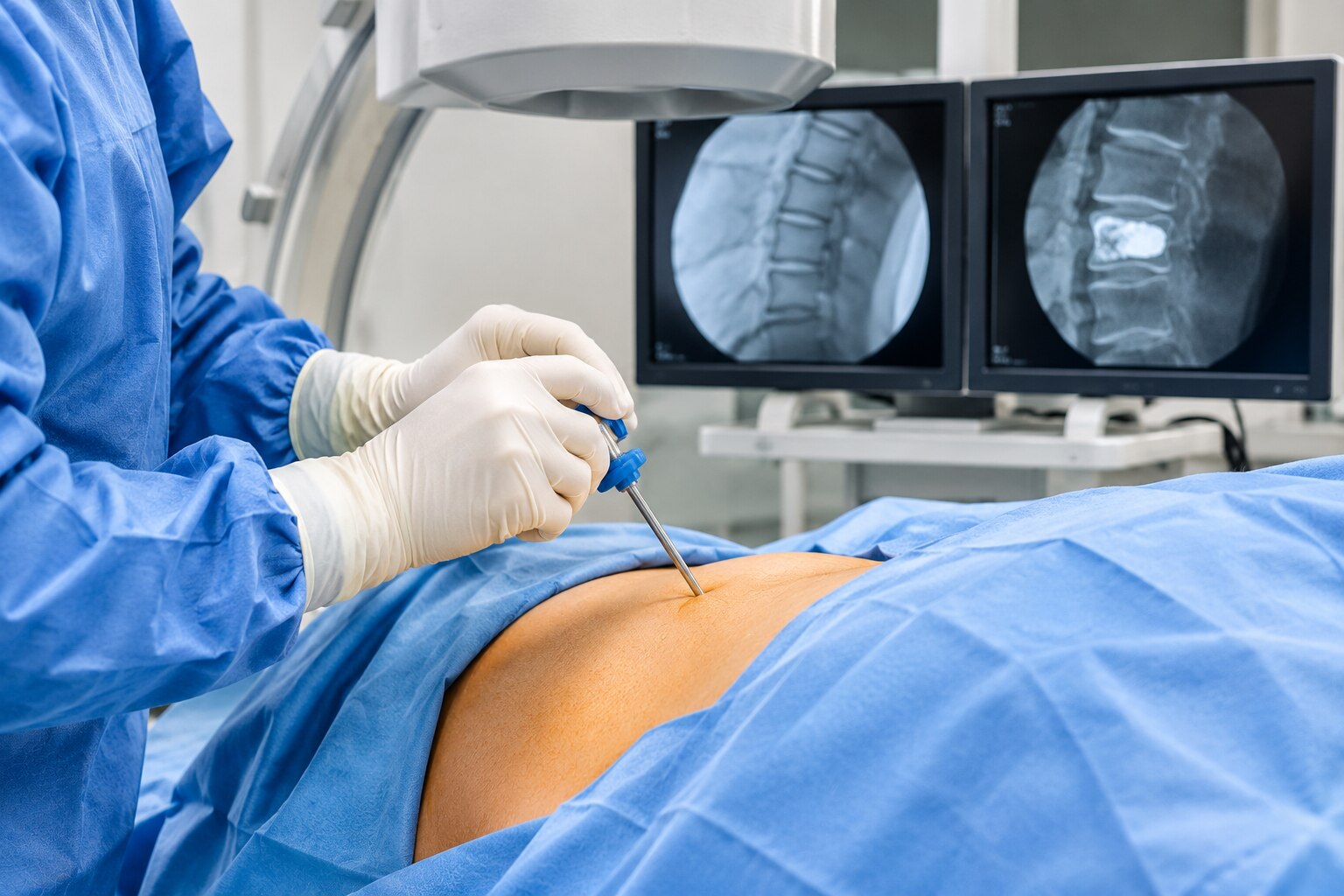
The procedure begins with review of X-rays, CT, and MRI to confirm the painful, active fracture and plan the safest needle path. You discuss consent, allergies, blood thinners, diabetes medicines, and sedation, then lie face down while the team monitors you.
- The skin is cleaned and covered with sterile drapes. Local anaesthetic numbs the entry site; light sedation may help you stay comfortable and still.
- Using fluoroscopy or CT guidance, the operator advances a needle through the skin into the fractured vertebral body.
- Polymethylmethacrylate cement is injected slowly. The operator watches its spread continuously to limit leakage into the spinal canal, nerve openings, or veins.
- The needle is removed, and staff observe changes in pain, leg strength, sensation, breathing, and blood pressure.
Vertebroplasty for fracture pain stabilizes the vertebral body; it does not remove the fracture or restore normal height. The vertebroplasty treatment benefits, when appropriate, include earlier movement and less pain, but recovery instructions still matter.
Follow your treating team’s lifting and bending limits, avoid prolonged bed rest, and walk as instructed. Check the puncture site for bleeding, swelling, or drainage. Mild back soreness near the needle site can occur briefly; seek urgent help for new leg weakness or numbness, severe escalating back pain, chest pain, or breathlessness.
How does vertebroplasty compare with kyphoplasty, bracing, and fixation surgery?
The choice depends on fracture stability, pain severity, imaging, and your ability to function—not on the name of the procedure alone. Vertebroplasty treatment benefits are most relevant when a recent, confirmed fracture causes severe pain that blocks standing, walking, or rehabilitation.
| Option | What it involves | Main trade-off |
|---|---|---|
| Vertebroplasty | Injects polymethylmethacrylate cement directly into the vertebral body without expanding a balloon. | Can provide rapid spinal compression fracture relief, but does not restore height; cement can leak outside the bone. |
| Kyphoplasty | Uses balloons to create a cavity before cement injection, with a possible aim of improving vertebral height or alignment. | May help selected collapsed fractures, but still carries cement-leakage and procedural risks. |
| Bracing and non-procedural care | Uses analgesics, activity modification without prolonged bed rest, selected short-term bracing, supervised rehabilitation, and osteoporosis treatment. | Avoids procedure risks, but pain can last weeks, bracing can restrict activity, medicines can cause side effects, and severe pain can prevent rehabilitation. |
| Fixation surgery | Uses screws, rods, decompression, or both to address mechanical instability or neural risk. | A larger operation for a different problem, not the routine answer to a stable painful compression fracture. |
Fixation becomes relevant with instability, deformity, posterior-element injury, major collapse, retropulsed bone, or nerve or spinal-cord risk. A stable fracture with pain is not the same surgical problem as an unstable fracture needing decompression or fixation. Neither vertebral augmentation option suits every fracture, so CT and MRI findings must guide the decision.
When is vertebroplasty unsuitable, and what risks must you weigh?
Vertebroplasty is unsuitable when the fracture is not the active pain source, the spine is unsafe to cement, or another operation is needed first. Mild improving pain and an old, healed fracture usually favour observation, rehabilitation, or osteoporosis treatment instead.
- Treat infection before cement injection.
- Correct uncontrolled bleeding risk before an elective procedure.
- Seek surgical assessment for severe vertebral collapse, spinal-cord or nerve compression, unstable traumatic injury, or a fracture requiring decompression or fixation.
| Finding | Safer direction | Why |
|---|---|---|
| Recent, unhealed fracture with severe disabling pain | Consider vertebroplasty after assessment | This is where vertebroplasty treatment benefits are most plausible |
| Mild improving pain or old healed fracture | Conservative care | Cement is unlikely to help an inactive pain source |
| Instability, retropulsion, or neural compression | Decompression or fixation assessment | Cement alone cannot protect compressed nerves or the spinal cord |
Cement can leak outside the vertebral body. Most leaks found on imaging cause no symptoms, but leakage into the spinal canal or neural foramen can compress a nerve or the spinal cord; venous leakage can cause pulmonary cement embolism.
Research has not established a consistent excess of adjacent fractures after vertebroplasty compared with sham or conservative care. Untreated osteoporosis remains a major ongoing fracture risk.
Ask whether MRI shows an active fracture, whether conservative care was adequate, and what other condition explains the pain. Dr Rahul Temani can help patients in Jaipur connect imaging, examination, fracture stability, and treatment goals before choosing vertebroplasty.
Related service
Vertebroplasty Treatment Vertebroplasty is an advanced, minimally invasive spine procedure designed to treat painful compression fractures of the vertebrae. View service → |
Frequently asked questions
What pain relief and mobility improvements can vertebroplasty provide?
By stabilizing movement inside a fractured vertebral body, vertebroplasty can reduce severe fracture pain and make standing, walking, and rehabilitation easier. Relief varies, and the procedure does not repair osteoporosis or restore lost vertebral height.
How do doctors confirm that the fractured vertebra is causing your pain?
Doctors compare your pain location and examination findings with imaging. MRI can show bone marrow oedema from a recent fracture, while X-rays or CT scans show collapse and anatomy. A fracture that matches both your symptoms and imaging is more likely to be the pain source.
What happens during vertebroplasty and how soon can you move afterward?
After local anaesthetic and sedation or anaesthesia, the doctor guides a needle through the skin into the vertebral body and injects polymethylmethacrylate cement. The cement hardens quickly; staff monitor you afterward, and many patients begin sitting or walking later the same day when safe.
How does vertebroplasty compare with kyphoplasty, bracing, and fixation surgery?
Vertebroplasty injects cement directly into the fracture. Kyphoplasty first uses a balloon to create a cavity and may restore some height. Bracing avoids an injection but can restrict comfort and movement. Fixation surgery uses screws or rods for instability, deformity, or nerve compression and involves greater surgical recovery.
When is vertebroplasty unsuitable, and what risks must you weigh?
It may be unsuitable for an unconfirmed pain source, a healed or stable fracture, infection, uncontrolled bleeding risk, cement allergy, or fracture anatomy that threatens the spinal canal. Risks include cement leakage, nerve or spinal cord injury, infection, bleeding, allergic reaction, pulmonary cement embolism, and fractures in nearby vertebrae.
Keywords