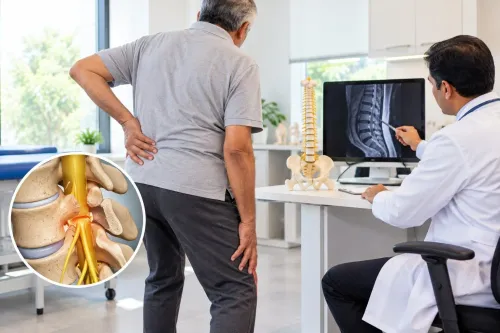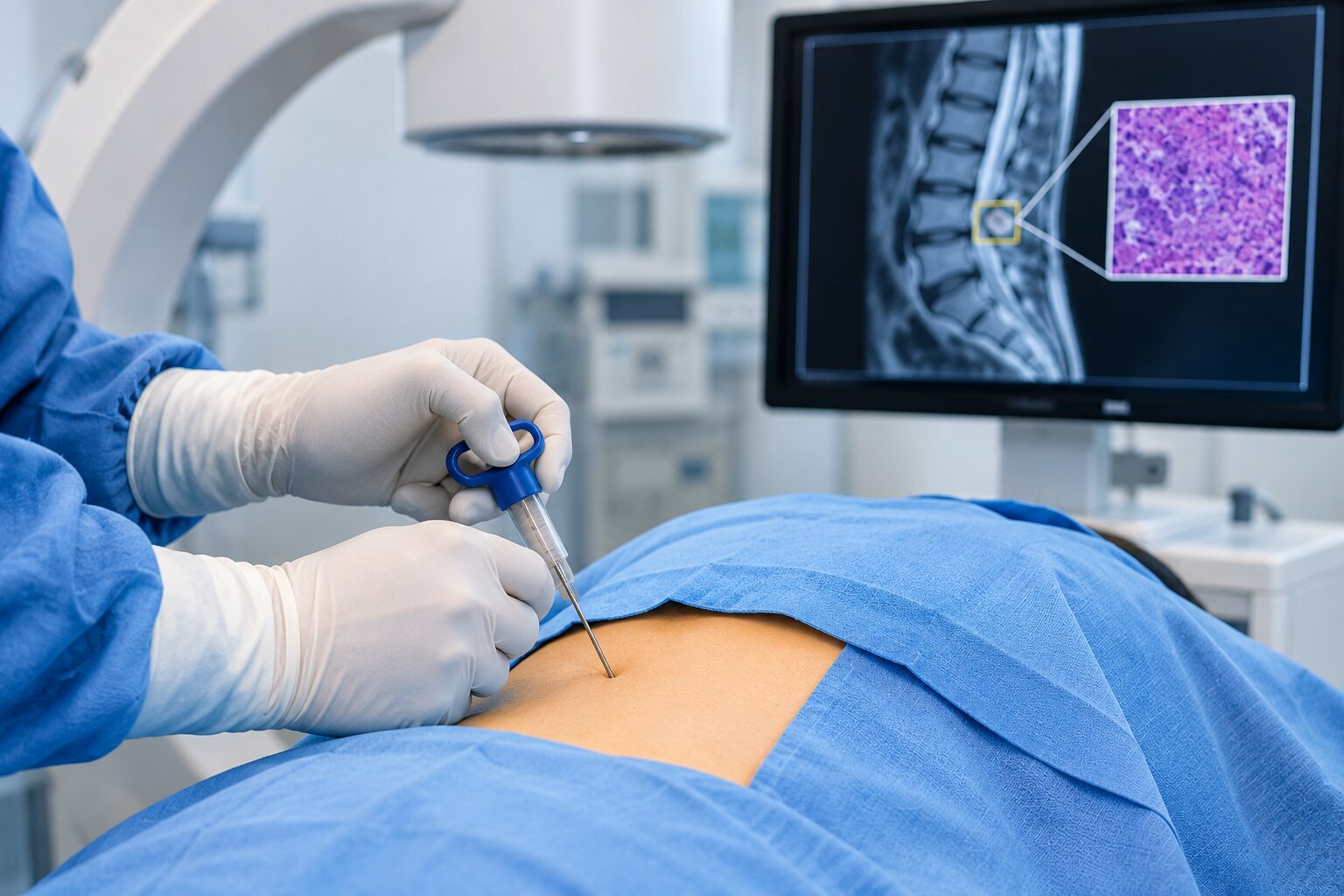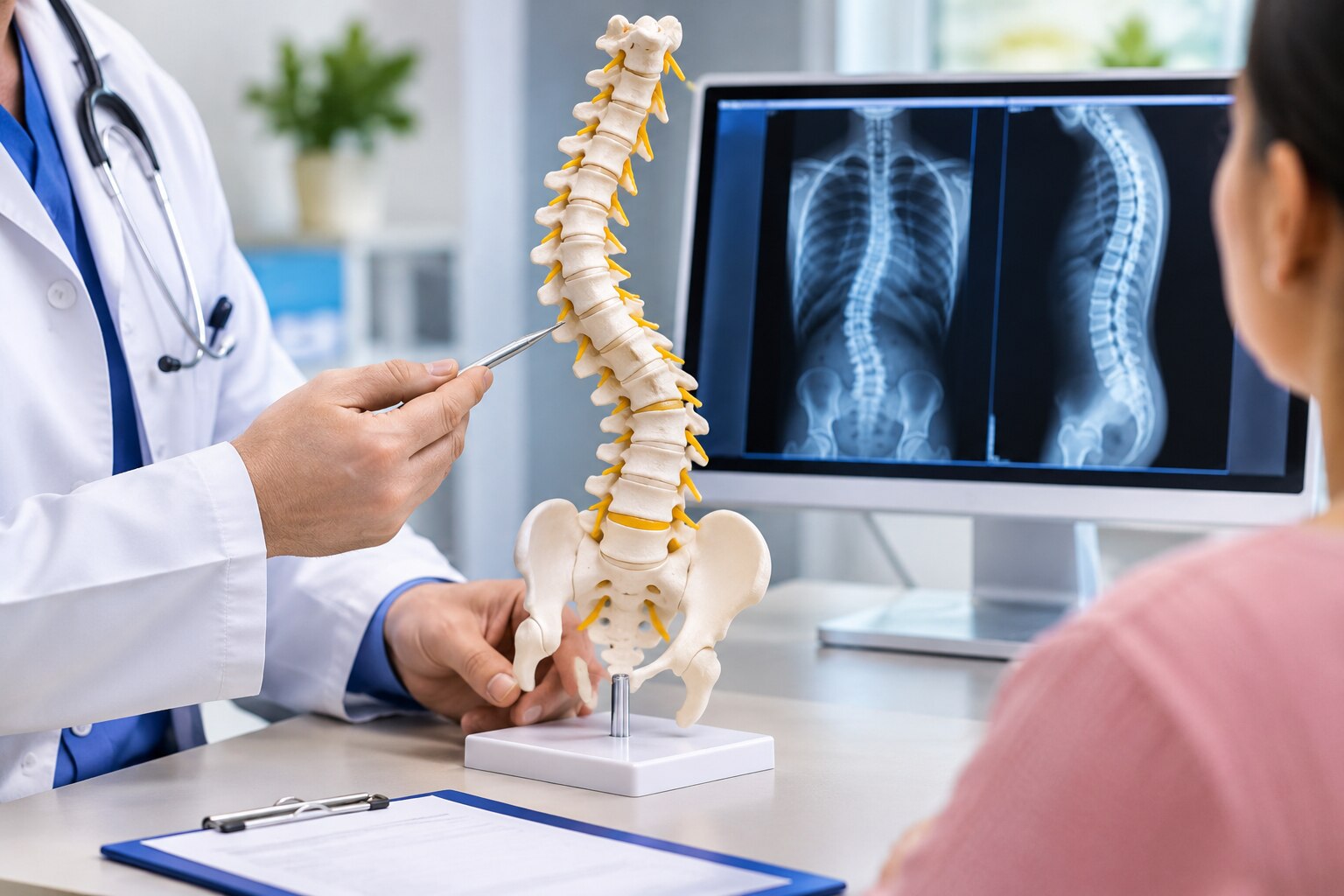
Kyphosis and scoliosis name different spinal deformities; fusion names an operation that may correct or stabilise one of them. The right plan depends on the curve’s cause, flexibility, progression, symptoms, nerve findings, age and bone quality—not on an X-ray angle alone. By the end, you can compare non-surgical care, surgical options and the questions to ask before choosing treatment in Jaipur.
Key takeaways
- Fusion is an operation, not a diagnosis competing with kyphosis or scoliosis.
- Standing X-rays, MRI and neurological findings guide the need for surgery.
- Age, cause, curve progression and symptoms change the treatment plan.
- Upper-neck fusion requires separate assessment of stability, nerves and movement.
Kyphosis, scoliosis and fusion are not three competing diagnoses
Kyphosis and scoliosis are spinal deformities; spinal fusion is an operation used to correct or stabilise some of them. Kyphosis means excessive forward rounding, scoliosis means sideways curvature with vertebral rotation, and fusion joins selected vertebrae so they heal as one solid segment.
| Term | What it means | What treatment depends on |
|---|---|---|
| Kyphosis | Excessive forward spinal curve | Cause, angle, flexibility, pain, balance and nerve pressure |
| Scoliosis | Sideways curve with rotation | Cobb angle, progression, flexibility, age and symptoms |
| Spinal fusion | An operation joining vertebrae with bone graft and implants | Instability, deformity severity, correction required and bone quality |
Therefore, “kyphosis scoliosis or fusion which spine surgery fits me in jaipur” frames the decision incorrectly. First identify the deformity and its cause; then compare observation, physiotherapy, posture and activity changes, pain treatment, bracing for selected growing children, or osteoporosis treatment against surgery.
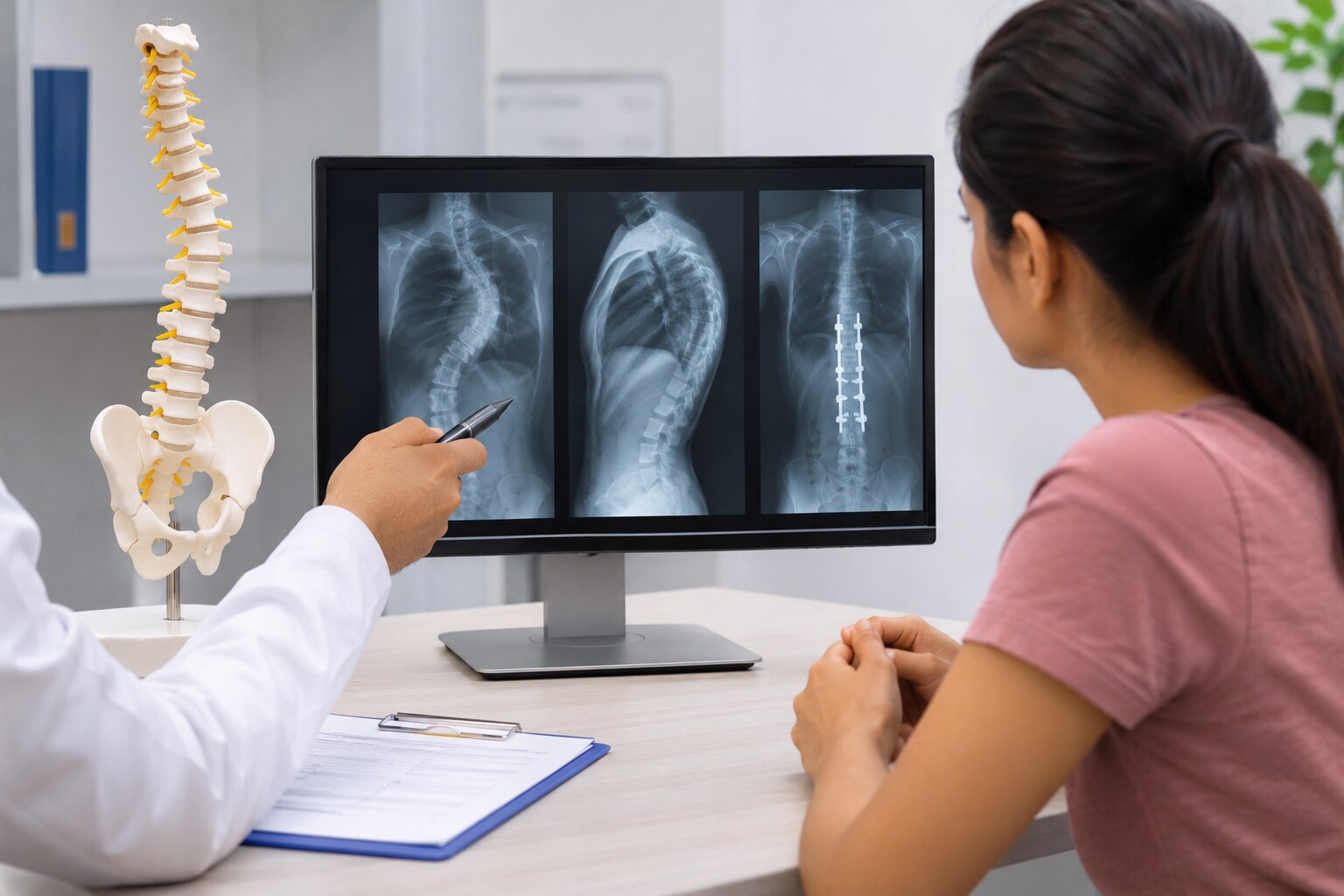
Standing full-spine X-rays measure the curve and overall balance. Side-bending X-rays show scoliosis flexibility, MRI examines the spinal cord and nerves, CT defines bone anatomy, and bone-health testing identifies osteoporosis. A rigid, progressing or neurologically threatening deformity may need reconstruction, while a flexible curve with manageable symptoms may not need fusion.
Ask which levels would be fused, what motion would be lost, and why decompression alone would or would not work.
Which tests show whether surgery is necessary?
No single test proves that you need surgery. The decision combines symptoms, progression, neurologic findings, curve size, flexibility, spinal balance, age, and bone strength.
Standing full-spine X-rays measure the Cobb angle for scoliosis, the kyphosis angle, coronal balance and sagittal vertical alignment. Compare these images over time to identify progression; a large curve alone does not prove that surgery will improve your pain.
- Side-bending X-rays show whether a scoliosis curve remains flexible or becomes fixed. Rigid curves need a different correction strategy from flexible curves.
- MRI examines the spinal cord, discs, nerves, stenosis and abnormalities inside the spinal canal. It becomes essential when weakness, numbness, walking difficulty or severe radiating pain is present.
- CT defines vertebral bone anatomy, fractures, congenital changes and previous instrumentation. It is useful when X-rays cannot explain the deformity.
- Bone-density testing, commonly a DEXA scan, checks for osteoporosis before major reconstruction. Weak bone raises the risk of implant loosening and failed fusion.
| Treatment path | Findings supporting it | What happens next |
|---|---|---|
| Observation | Mild, stable deformity without disabling pain or neurologic loss | Repeat imaging and clinical review |
| Rehabilitation or bracing | Manageable symptoms, flexible deformity, or a growing child or adolescent | Physiotherapy, posture and activity changes, analgesia, or selected bracing |
| Surgical discussion | Progression, severe imbalance, persistent disabling pain, nerve or cord compromise, fracture, tumour, or instability | Review fusion levels, decompression, correction goals, bone health and rehabilitation |
When does the cause, age or symptom pattern change the plan?
Move from non-surgical care to a surgical discussion when the deformity is progressing, pain remains disabling after structured treatment, weakness or numbness appears, breathing or balance is affected, or a fracture, tumour or spinal-cord problem is present. A discussion does not commit you to surgery; it clarifies risk, timing and alternatives.
For adolescent idiopathic scoliosis, a progressive curve near 45–50 degrees often prompts discussion of posterior fusion, while observation or bracing suits many smaller curves during growth. Scheuermann kyphosis needs a different assessment because rigidity, back pain and forward imbalance matter more than the curve number alone.
An adult with adult degenerative scoliosis also needs evaluation of stenosis, leg symptoms, sagittal balance, frailty and bone strength; decompression alone can be appropriate when alignment is stable, while instability or deformity-producing decompression supports adding fusion.
The cause changes the decision:
- Congenital deformity: abnormal vertebrae can create a short, rigid curve and require detailed imaging before selecting levels.
- Post-traumatic deformity: a collapsed or malunited vertebra, instability or nerve compression can make reconstruction more urgent.
- Neuromuscular deformity: muscle weakness, pelvic balance, breathing function and progression influence timing and recovery planning.
- Osteoporosis-related kyphosis: treat bone loss and assess vertebral collapse first; weak bone raises fixation and fracture risks.
Ask what is driving symptoms, whether the curve is flexible, what non-surgical option remains, and how bone health will be optimised before deciding.
What scoliosis surgery options balance correction with movement?
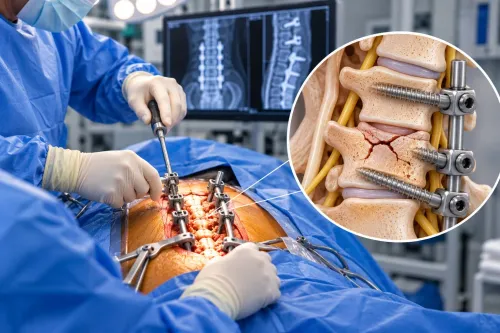
Posterior spinal fusion is the main corrective operation for a structural curve that is progressing, unbalanced, or causing significant symptoms. Screws and rods realign the vertebrae, while bone graft joins selected levels permanently. The best scoliosis surgery options in Jaipur depend on curve pattern, flexibility, growth remaining, symptoms, and bone quality—not the Cobb angle alone.
| Option | What it does | What you gain or give up |
|---|---|---|
| Posterior spinal fusion | Corrects and stabilises a structural curve with implants and bone graft | Strong correction and stability, but no movement remains across fused levels |
| Selective fusion | Fuses only the structural curve while leaving compensatory levels mobile | Preserves more movement; unsuitable if the unfused curves will not balance afterward |
| Growth-preserving treatment | Growing rods or vertebral body tethering guide correction while preserving spinal growth | Delays definitive fusion in selected children, but requires strict selection and possible later procedures |
| Decompression for scoliosis | Removes bone or ligament compressing a nerve | Relieves leg pain or weakness; decompression alone does not correct a major curve and can worsen instability |
Fusing more levels can improve shoulder or pelvic balance and reduce residual curvature, but it sacrifices more natural motion and increases operative complexity. Longer constructs also raise the chance of blood loss, implant failure, pseudarthrosis, junctional kyphosis, and adjacent-segment problems.
Ask which levels will be fused, whether side-bending X-rays show flexibility, and why decompression alone is or is not appropriate. A growing child may need a different plan from an adult with a rigid, degenerative curve.
How do kyphosis and upper-neck fusion decisions differ?
Kyphosis surgery aims to restore forward curvature and balance; upper-neck fusion aims to stabilise the junction between the skull and cervical spine. They are not interchangeable decisions, and occipito cervical fusion suitability requires evidence of a dangerous structural problem, not neck pain alone.
| Option | What it means | When it applies |
|---|---|---|
| Posterior instrumented fusion | Screws and rods hold corrected vertebrae while bone joins across selected levels | Progressive, symptomatic or unstable kyphosis |
| Osteotomy | A controlled bone cut increases correction in a rigid curve | Fixed deformity that will not realign on bending X-rays |
| Anterior-plus-posterior reconstruction | Disc or vertebral work from the front is combined with posterior fixation | Severe, rigid kyphosis requiring support from both sides |
| Vertebral-column resection | Removal of a vertebral segment permits major angular correction | Exceptional, sharply angular deformity |
| Occipito-cervical fusion | The skull is connected to upper cervical vertebrae, sacrificing motion | Instability at the craniovertebral junction, basilar invagination, severe deformity, tumour, infection, trauma or neurologic compression |
Before comparing kyphosis surgery options in Jaipur, ask the specialist:
- What are my measured Cobb and kyphosis angles, and how flexible is the curve?
- Which levels will you fuse, and what will happen to global balance?
- Why is decompression alone insufficient, or why is fusion unnecessary?
- What are your expected union and revision rates?
- How will you optimise osteoporosis or low bone density before surgery?
- What rehabilitation and swallowing or breathing monitoring will I need?
Occipito-cervical fusion can cause nonunion, hardware failure, vertebral-artery or spinal-cord injury, and poor head positioning. Dr Rahul Temani can help structure these questions around your imaging, neurologic findings and bone health.
Related services
Kyphosis, Scoliosis & Occipito-Cervical Fusion Surgery Kyphosis, Scoliosis & Occipito-Cervical Fusion Surgery Spinal deformities such as kyphosis and scoliosis can significantly affect posture, balance, mobility, and overall quality of life. View service → |
Advanced Spinal Deformity Correction Surgery In Jaipur Advanced Spinal Deformity Correction Surgery In Jaipur Spinal Deformity Correction Surgery Spinal Deformity Correction is a specialized surgical approach designed to treat abnormal curvatures and... View service → |
Frequently asked questions
Are kyphosis, scoliosis and fusion competing spine diagnoses?
No. Kyphosis and scoliosis describe spinal deformities, while fusion is an operation used to correct or stabilise selected spinal segments.
Which tests show whether kyphosis or scoliosis surgery is necessary?
Standing full-spine X-rays show alignment and curve size. MRI assesses discs, the spinal cord and nerve compression; examination findings and symptoms complete the decision.
How do age, cause and symptoms change spine surgery planning?
The plan changes with growth, curve progression, osteoporosis, previous surgery, pain, weakness, balance problems and the underlying cause of the deformity.
When is occipitocervical fusion considered?
Occipitocervical fusion is considered when the junction between the skull and upper cervical spine is unstable or compressed. Assessment must weigh neurological risk against the loss of upper-neck movement.
Keywords