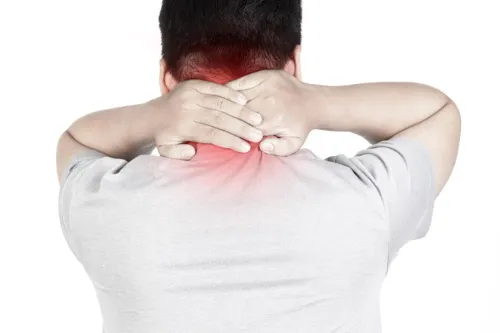
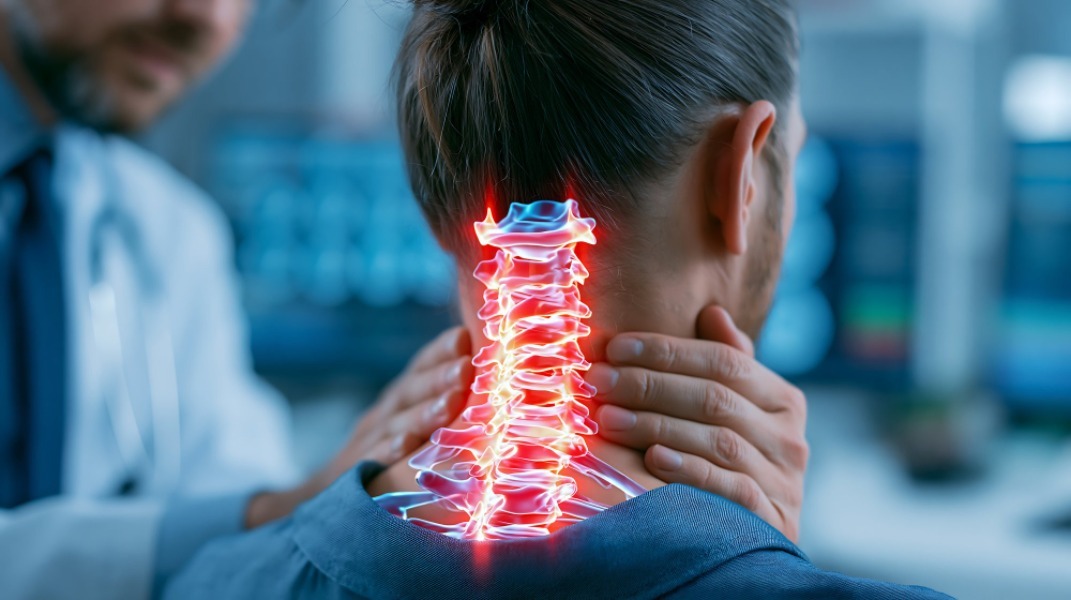
Cervical spine problems can affect much more than the neck. Depending on which structures are involved, patients may experience shoulder pain, arm pain, numbness, tingling, weakness, loss of hand coordination, or difficulty with balance and walking.
Because the symptom range is broad, choosing cervical spine treatment should begin with a precise diagnosis rather than a predetermined procedure.
For patients in Jaipur and elsewhere in Rajasthan, understanding how different treatment options are selected can make specialist consultations more productive.
First Identify What Is Being Treated
Cervical problem is a broad description.
Symptoms may arise from disc degeneration, disc herniation, nerve-root compression, narrowing of the spinal canal, age-related changes, instability, injury, or other disorders.
Two people with similar neck pain can therefore need completely different treatment.
Before agreeing to any intervention, patients should understand:
- The diagnosis
- The spinal level involved
- Whether a nerve or spinal cord is affected
- Whether there is instability
- How well imaging matches the symptoms
These factors influence the entire treatment pathway.
Conservative Care Has a Defined Role
When there is no urgent neurological indication, non-surgical treatment may be considered.
This can include medication, activity modification, physiotherapy, ergonomic changes, and rehabilitation.
The objective is to reduce symptoms while maintaining or restoring function.
Patients should also understand what conservative care is expected to achieve and how long progress will be monitored. Repeating the same treatment indefinitely despite worsening neurological function is different from giving an appropriate condition sufficient time to improve.
When Does Surgery Become More Relevant?
Surgical treatment may be discussed when there is clinically significant compression or instability, progressive neurological deterioration, spinal cord involvement, or persistent disabling symptoms that have not responded adequately to suitable conservative treatment.
The specific operation depends on the underlying pathology.
A surgical recommendation should be explainable in straightforward terms. Patients should know what structure will be treated, why that approach is appropriate, and what symptoms the procedure is intended to improve.
Five Questions to Ask Before Choosing a Procedure
1. Does my MRI explain my symptoms?
Imaging and symptoms should generally correspond. An abnormal scan without matching clinical findings may not explain the patient's complaints.
2. Is a nerve root or the spinal cord affected?
This distinction can influence both urgency and treatment planning.
3. What happens if I continue conservative care?
Understanding the expected natural course and any risks of waiting helps patients make informed decisions.
4. What is the goal of the proposed procedure?
The objective might be decompression, stabilisation, or addressing another structural issue. Patients should understand the intended benefit.
5. What does recovery involve?
Ask about mobilisation, activity restrictions, rehabilitation, work, driving, and follow-up rather than focusing only on the operation itself.
Be Careful With Procedure-First Decisions
Patients sometimes encounter information that presents a particular technique as the solution before the diagnosis has been fully established.
The sequence should be reversed.
Diagnosis comes first. Treatment selection comes second. Technique comes third.
A minimally invasive approach may be appropriate for one patient and unsuitable for another. Similarly, not every cervical disc problem requires fusion or any operation at all.
Readiness for a Specialist Consultation
A specialist review is particularly worthwhile when arm weakness is developing, numbness is persistent, symptoms affect both hands, balance changes occur, or conservative treatment has failed to restore acceptable function.
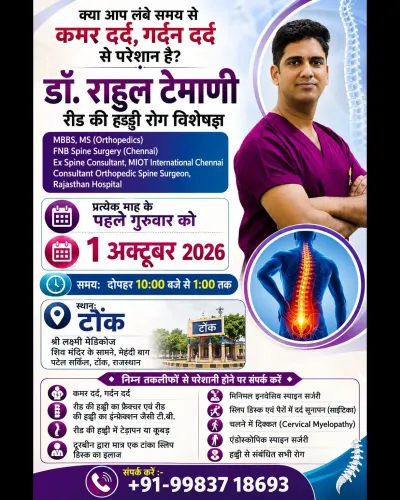
Patients exploring cervical spine treatment in Jaipur can discuss these factors with Dr Rahul Temani, including previous imaging and treatment history.
The strongest treatment decision is not necessarily the most aggressive or technologically complex option. It is the option that appropriately addresses the diagnosed cervical problem while considering neurological findings, functional limitations, alternatives, and the patient's individual circumstances.
Keywords