
Advanced Spine Biopsy Treatment for Accurate Diagnosis
Description
Spine Biopsy
A spine biopsy is a minimally invasive diagnostic procedure used to collect a small sample of bone or tissue from the spine to detect infections, tumors, inflammation, or other spinal abnormalities. It plays a vital role in identifying the exact cause of spinal lesions or persistent back pain, especially when MRI or CT scan findings are unclear.
What is a Spine Biopsy?
During a spine biopsy, a small tissue or bone sample is removed using a needle or a minor surgical procedure. The collected sample is examined in a pathology laboratory to determine whether the condition is caused by cancer, infection, tuberculosis, or other spinal diseases.
Spine biopsies may be performed in the cervical (neck), thoracic (mid-back), or lumbar (lower back) spine depending on the location of the abnormality.
Types of Spine Biopsy
Needle Biopsy (Percutaneous Biopsy)
Minimally invasive procedure
Performed under CT scan or fluoroscopy guidance
Usually done under local anesthesia
Faster recovery with minimal discomfort
Open Biopsy (Surgical Biopsy)
Performed in an operating room under general anesthesia
Recommended when a larger tissue sample is required
Used when needle biopsy is not feasible
Why is Spine Biopsy Performed?
A spine biopsy helps doctors:
Diagnose spinal tumors (benign or malignant)
Detect spinal infections such as tuberculosis or osteomyelitis
Investigate unexplained back pain with abnormal imaging findings
Confirm metastatic cancer involving the spine
Plan the most effective treatment strategy
Indications for Spine Biopsy
Abnormal MRI or CT scan findings
Suspected bone cancer or spinal metastasis
Suspected spinal tuberculosis or infection
Persistent back pain not improving with treatment
Vertebral collapse or unexplained spinal fracture
How the Procedure is Done
The patient is positioned in a CT or fluoroscopy suite
The biopsy area is sterilized and numbed with anesthesia
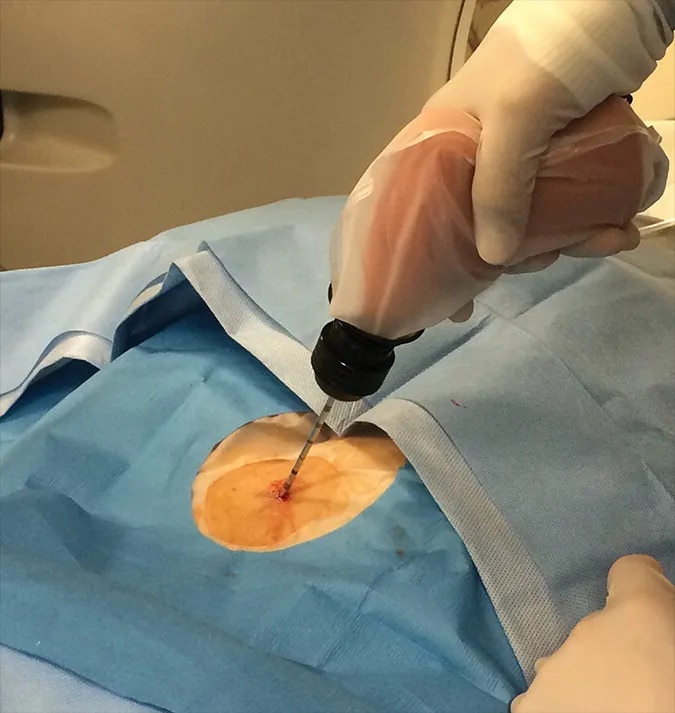
A biopsy needle is carefully guided into the affected spinal area
Tissue or bone samples are collected for laboratory analysis
The procedure typically takes 30–60 minutes
Benefits of Spine Biopsy
Provides accurate diagnosis of spinal conditions
Minimally invasive and safe procedure
Short recovery time
Helps avoid unnecessary treatments or surgery
Assists doctors in planning targeted treatment options